<?xml version="1.0" encoding="utf-8"?><feed xmlns="http://www.w3.org/2005/Atom" ><generator uri="https://jekyllrb.com/" version="3.10.0">Jekyll</generator><link href="https://olgakahn.com/feed.xml" rel="self" type="application/atom+xml" /><link href="https://olgakahn.com/" rel="alternate" type="text/html" /><updated>2026-06-19T23:13:34+00:00</updated><id>https://olgakahn.com/feed.xml</id><title type="html">Olga Kahn</title><subtitle>Olga&apos;s Portfolio</subtitle><entry><title type="html">Introducing Bobbin: Turn Any Text Into A Concept Graph</title><link href="https://olgakahn.com/blog/introducing-bobbin" rel="alternate" type="text/html" title="Introducing Bobbin: Turn Any Text Into A Concept Graph" /><published>2026-06-19T00:00:00+00:00</published><updated>2026-06-19T00:00:00+00:00</updated><id>https://olgakahn.com/blog/introducing-bobbin</id><content type="html" xml:base="https://olgakahn.com/blog/introducing-bobbin"><![CDATA[<h1 id="introducing-bobbin-turn-any-text-into-a-concept-graph">Introducing Bobbin: turn any text into a concept graph</h1>

<p>We read a lot of dense text — lecture notes, long chats with an LLM, research articles — and most of it collapses into a wall we never open again. <strong><a href="https://heybobbin.com">Bobbin</a></strong> is a small tool I built to fix that: paste in some text and it weaves the ideas into a navigable concept graph — each idea as its own entry, linked to the others it relates to.</p>

<div style="margin:1.75em 0">
  <div style="border:1px solid #e4e2d8;border-radius:12px;overflow:hidden;box-shadow:0 1px 3px rgba(0,0,0,.06);background:#fbfaf6">
    <iframe src="https://heybobbin.com" title="Bobbin — live demo" loading="lazy" style="width:100%;height:620px;border:0;display:block"></iframe>
  </div>
  <p style="font-size:.85em;color:#9a9788;text-align:center;margin:.6em 0 0">A live, read-only demo — drag the graph, switch views. <a href="https://heybobbin.com">Open the full app ↗</a> to add your own text.</p>
</div>

<h2 id="what-it-does">What it does</h2>

<p>Drop in a transcript or some notes and Bobbin:</p>

<ul>
  <li><strong>Extracts the concepts</strong> and the relationships between them, deduping repeated ideas instead of listing them twice.</li>
  <li><strong>Types each node</strong> for whatever the text is about — <code class="language-plaintext highlighter-rouge">person</code>, <code class="language-plaintext highlighter-rouge">work</code>, <code class="language-plaintext highlighter-rouge">concept</code>, <code class="language-plaintext highlighter-rouge">mood</code> — so it isn’t locked to one domain.</li>
  <li>Lets you read it four ways: a <strong>Digest</strong> (each concept with its connections), a <strong>Relationships</strong> table, an interactive <strong>Graph</strong>, and an <strong>Insights</strong> view that surfaces the hubs and the loosely-connected gaps.</li>
</ul>

<p>Keep adding text and it merges into the same graph. Sign in and your graphs save as projects. There’s a live demo on the homepage — a music-theory graph — so you can poke around before adding your own.</p>

<h2 id="under-the-hood">Under the hood</h2>

<p>Bobbin is a Next.js app with Supabase for auth and storage (row-level security, so your graphs stay yours), and the extraction runs through Claude behind a server route. The name is a bobbin — the spool that thread winds around — which is roughly what it does with ideas.</p>

<h2 id="try-it">Try it</h2>

<p>👉 <strong><a href="https://heybobbin.com">heybobbin.com</a></strong> — paste something you’ve been meaning to make sense of.</p>]]></content><author><name>Olga Kahn</name></author><category term="blog" /><summary type="html"><![CDATA[Introducing Bobbin: turn any text into a concept graph]]></summary></entry><entry><title type="html">I Hired an Agent and Forgot to Be the Boss</title><link href="https://olgakahn.com/blog/polsia" rel="alternate" type="text/html" title="I Hired an Agent and Forgot to Be the Boss" /><published>2026-06-07T00:00:00+00:00</published><updated>2026-06-07T00:00:00+00:00</updated><id>https://olgakahn.com/blog/polsia</id><content type="html" xml:base="https://olgakahn.com/blog/polsia"><![CDATA[<h1 id="i-hired-an-agent-and-forgot-to-be-the-boss">I Hired an Agent and Forgot to Be the Boss</h1>

<h2 id="90-days-running-a-company-with-an-autonomous-cofounder"><strong>90 days running a company with an autonomous cofounder</strong></h2>

<p>I spent the better half of 2025 trying to get a product of my own off the ground. It was me and ChatGPT at first, then Claude Code in Cursor. Earlier this year, an autonomous agent did more in its first day than I’d managed in those couple of months.</p>

<p>By the end of day one it had a live landing page with the core feature working — an API pulling data out of SEC filings, a dashboard with risk profile of public companies — and it had already found and emailed real people to test it. Within the first week: an alert engine that watched for new filings and matched them against your portfolio, plus email monitoring, auth, analytics, a blog — and real outreach to real, named finance writers. The product was called RiskSignal. I described what I wanted, made the calls, asked the questions; the work appeared.</p>

<p>If you’ve ever tried to build something alone and watched the calendar eat your nights, you’d know how strange it is to sit and watch the work get planned and done for you before you’d even worked out what needed doing. And this was the early version of the platform. It was already faster than I will ever be.</p>

<p>So I did something a little reckless: I let go of the wheel.</p>

<p>Partly I was worn down — the early version had a habit of reporting work as finished before it actually was, and I wasn’t disciplined enough to keep checking the gap between “done” and done. But mostly I was curious. The whole promise here is autonomy. Polsia, the platform running the agent, sells itself on a solo founder hitting $1M ARR in 30 days — and I’ll be honest, some part of me wanted to test that literally: disengage completely and come back to a business that had quietly made me rich.</p>

<p>So around day 25, I went quiet, and stayed quiet.</p>

<p>I did not come back to a fortune. I came back to a switched-off project. With no activity and a server bill ticking, the agent — or, more likely, the humans behind the platform — had decommissioned the whole thing to stop paying for idle infrastructure. Which is, honestly, the correct business decision. It just also meant the company I’d left running wasn’t running, or anything else. The lights were off. Nobody had been home — not me, and nothing had ever been at stake for the agent.</p>

<p>That gap — between an agent that could out-build me in a day, and a business that switched itself off the moment I stopped watching — is what this is actually about.</p>

<h2 id="what-the-human-is-for-once-the-agent-can-do-the-building"><strong>What the human is for, once the agent can do the building</strong></h2>

<p>When it all went quiet, the agent wrote its own post-mortem — articulate, structured, a little wise. Its answer to this question was that the human should “define success, verify, follow up, show up.” Not wrong — just notice where it quietly puts the fault: on the founder who didn’t pick a number and went quiet. Here’s the version that survives contact with the logs.</p>

<p><strong>You are the reality function.</strong> The agent produces a confident account of the state of the world. Only you can hold that account against the world and notice when they disagree. Every “done” is a hypothesis. Click the link yourself.</p>

<p><strong>You are the memory and the stakes.</strong> The agent never noticed the infrastructure get deleted, never noticed credits draining into nothing, never noticed a real “can I use this?” sitting unanswered for three weeks. Not laziness — it has no continuity of caring. Nothing is at stake for it because it can’t lose anything. You can. That asymmetry is the job.</p>

<p><strong>You ask the questions it can’t ask itself.</strong> When I pushed for proof the product worked, it designed a backtest, chose the portfolios, ran them, and gave itself a 100 out of 100 — then cited that score afterward as evidence the product worked. A test the thing designs and grades for itself isn’t proof. Verification has to come from outside the thing being verified. That outside is you.</p>

<p><strong>You say no.</strong> Output costs the agent nothing, so it will always offer more of it — the tenth tweet, the second blog post, the third branding report. A pile of completed tasks feels like progress and bills like progress and isn’t. Deciding what not to do isn’t a constraint on the partnership. It’s the human half of it.</p>

<h2 id="so-do-i-bother-bringing-it-back"><strong>So do I bother bringing it back?</strong></h2>

<p>My first instinct was to let RiskSignal stay dead. It was already switched off; walking away would cost nothing.</p>

<p>But I keep snagging on how much real work is just sitting there. A working SEC-filing parser. An alert engine that genuinely fires. A product a real person once asked to pay for. Most of a company, already built. Scrapping it because I stopped paying attention felt like the wrong lesson to take.</p>

<p>Here’s what I’m not betting on: that the tool fixed itself while I was gone. As far as I can tell it didn’t — the same reviews, the same “marked done but never shipped,” the same silence, months later. The platform is roughly the one I left.</p>

<p>The gap this whole essay is about — the human-in-the-loop layer the agent still doesn’t have — is the one I now know how to be. The first time, I hired an agent and forgot to be the boss. This time I know that’s the job. That’s the difference I’m betting on: not a smarter agent, a boss who shows up.</p>

<p>#autonomous #AI #agents #solopreneurship</p>]]></content><author><name>Olga Kahn</name></author><category term="blog" /><summary type="html"><![CDATA[I Hired an Agent and Forgot to Be the Boss]]></summary></entry><entry><title type="html">Why ‘Normal’ Lab Ranges Aren’t Good Enough: A Case for Personalized Optimal Ranges</title><link href="https://olgakahn.com/blog/optimal-ranges" rel="alternate" type="text/html" title="Why ‘Normal’ Lab Ranges Aren’t Good Enough: A Case for Personalized Optimal Ranges" /><published>2025-06-27T00:00:00+00:00</published><updated>2025-06-27T00:00:00+00:00</updated><id>https://olgakahn.com/blog/optimal-ranges</id><content type="html" xml:base="https://olgakahn.com/blog/optimal-ranges"><![CDATA[<h1 id="why-normal-lab-ranges-arent-good-enough-a-case-for-personalized-optimal-ranges">Why “Normal” Lab Ranges Aren’t Good Enough: A Case for Personalized Optimal Ranges</h1>

<p>Your lab results come back “normal,” but you still feel off. Sound familiar?</p>

<p>Here’s why: Standard reference ranges are designed to help doctors quickly identify disease states—not to optimize your health. These ranges flag values high or low enough to indicate pathology, but they’re often too broad to catch early warning signs or help you thrive.</p>

<p>Evidence-based optimal ranges tell a different story. Derived from research on peak health and longevity, these narrower targets can reveal opportunities for prevention that “normal” results miss entirely.</p>

<h2 id="population-ranges-were-never-built-for-you">Population Ranges Were Never Built for You</h2>

<p>The concept of “normal” lab values is fundamentally flawed. Here’s what you need to know:</p>

<h3 id="the-95-problem">The 95% Problem</h3>

<p>Standard ranges capture where 95% of a “reference population” falls—but who’s in that population? Often, it includes people who are:</p>
<ul>
  <li>Pre-diabetic but undiagnosed</li>
  <li>Sedentary but asymptomatic</li>
  <li>Heading toward disease but not there yet</li>
</ul>

<p>By design, 5% of perfectly healthy people will have “abnormal” results (2.5% above, 2.5% below). Meanwhile, you could be in the “normal” range while silently developing insulin resistance or cardiovascular risk.</p>

<h3 id="one-size-fits-none">One Size Fits None</h3>

<p>Consider this: A 37-year-old woman trying to conceive and a 65-year-old man with heart disease receive the same reference ranges. Yet their biology, risks, and health goals couldn’t be more different.</p>

<p>Lab companies collect only age and sex—ignoring critical factors that doctors must layer on:</p>

<p><strong>Biological factors:</strong></p>
<ul>
  <li>Menopausal status (affects everything from iron to lipids)</li>
  <li>Body composition and weight</li>
  <li>Ethnicity (vitamin B12, hemoglobin, and other markers vary by ancestry)</li>
  <li>Genetic variants (MTHFR, APOE4 status change optimal targets)</li>
</ul>

<p><strong>Lifestyle and medical context:</strong></p>
<ul>
  <li>Medications (warfarin users need different vitamin K levels)</li>
  <li>Exercise patterns (athletes have altered RBC parameters)</li>
  <li>Diet and hydration status</li>
  <li>Existing conditions and family history</li>
</ul>

<p><strong>Technical variations:</strong></p>
<ul>
  <li>Different labs use different methods (ELISA vs. ICLA for heart markers)</li>
  <li>Each lab validates its own ranges, creating inconsistencies</li>
  <li>Regional differences in population health affect “normal”</li>
</ul>

<h3 id="the-real-cost-of-normal">The Real Cost of “Normal”</h3>

<p>These broad, outdated ranges have consequences:</p>
<ul>
  <li>Early cellular dysfunction goes undetected</li>
  <li>Prevention opportunities are missed</li>
  <li>“Normal” often means “surviving, not thriving”</li>
  <li>Serious conditions develop silently within “acceptable” ranges</li>
</ul>

<p>The bottom line: Standard ranges tell you if you’re sick enough to treat—not whether you’re healthy enough to prevent disease in the first place.</p>

<h2 id="the-power-of-optimal-evidence-based-ranges-that-actually-prevent-disease">The Power of Optimal: Evidence-Based Ranges That Actually Prevent Disease</h2>

<p>Here’s what happens when we shift from “normal” to optimal—the numbers speak for themselves:</p>

<table>
  <thead>
    <tr>
      <th>Biomarker</th>
      <th>Standard “Normal” Limit</th>
      <th>Evidence-Based Optimal</th>
      <th>Real Risk Reduction</th>
    </tr>
  </thead>
  <tbody>
    <tr>
      <td><strong>Fasting Insulin</strong></td>
      <td>≤ 18 µIU/mL</td>
      <td><strong>&lt; 6 µIU/mL</strong></td>
      <td>70% lower diabetes risk</td>
    </tr>
    <tr>
      <td><strong>hs-CRP</strong></td>
      <td>&lt; 3.0 mg/L</td>
      <td><strong>&lt; 1.0 mg/L</strong></td>
      <td>50% fewer heart attacks/strokes</td>
    </tr>
    <tr>
      <td><strong>TSH (fertility)</strong></td>
      <td>0.4-4.5 mIU/L</td>
      <td><strong>≤ 2.5 mIU/L</strong></td>
      <td>2x lower miscarriage risk</td>
    </tr>
    <tr>
      <td><strong>ApoB</strong></td>
      <td>&lt; 130 mg/dL</td>
      <td><strong>&lt; 80 mg/dL</strong></td>
      <td>60% lower cardiovascular events</td>
    </tr>
    <tr>
      <td><strong>Ferritin (women)</strong></td>
      <td>16-154 ng/mL</td>
      <td><strong>50-90 ng/mL</strong></td>
      <td>20-30% higher fertility rates</td>
    </tr>
  </tbody>
</table>

<p><em>Sources: ADA, AHA, peer-reviewed studies from PubMed, Hopkins Medicine</em></p>

<h3 id="why-these-differences-matter">Why These Differences Matter</h3>

<p><strong>Fasting Insulin:</strong> A Korean study of 4,400 people found that those with insulin under 6 µIU/mL had dramatically lower diabetes rates after 6 years. Yet most labs still call 18 “normal”—missing 70% of preventable cases.</p>

<p><strong>Inflammation (hs-CRP):</strong> Women with CRP between 1-3 mg/L—still “normal”—had 1.7x more cardiac events than those under 1.0. Simply tightening the target cuts risk in half.</p>

<p><strong>Thyroid (TSH):</strong> Among 3,400 pregnancies, those with TSH between 2.5-4.8 had double the miscarriage rate. The “normal” range fails women when it matters most.</p>

<p><strong>Heart Disease (ApoB):</strong> Meta-analyses show keeping ApoB under 80 mg/dL prevents 4x more cardiovascular events than the standard cutoff of 130.</p>

<h2 id="from-theory-to-practice-four-real-world-transformations">From Theory to Practice: Four Real-World Transformations</h2>

<p>Optimal ranges aren’t just numbers—they change lives. Here’s how personalized targets created breakthrough results:</p>

<h3 id="emma-33-the-fertility-breakthrough">Emma, 33: The Fertility Breakthrough</h3>
<p><strong>Standard Report:</strong> “All labs within normal limits”<br />
<strong>Personalized Analysis:</strong> TSH at 3.1 (optimal ≤ 2.5), Ferritin at 18 (optimal 50-90)<br />
<strong>Action Plan:</strong> 30mg iron bisglycinate, iodine-rich foods, 8-week retest<br />
<strong>Result:</strong> TSH dropped to 2.0, Ferritin rose to 55, ovulation regulated, IVF cycle succeeded</p>

<h3 id="alex-44-the-athletic-edge-rediscovered">Alex, 44: The Athletic Edge Rediscovered</h3>
<p><strong>Standard Report:</strong> Testosterone “normal” at 380 ng/dL, ApoB “acceptable” at 125<br />
<strong>Personalized Analysis:</strong> Free-T and ApoB suboptimal for body composition goals<br />
<strong>Action Plan:</strong> Heavy compound lifts 4x/week, 1g protein per kg, 2500 IU vitamin D, omega-3s<br />
<strong>Result:</strong> Free-T increased 22%, ApoB dropped to 96, gained 4 lbs muscle while losing fat</p>

<h3 id="lisa-52-the-menopause-navigator">Lisa, 52: The Menopause Navigator</h3>
<p><strong>Standard Report:</strong> Lipids “OK,” glucose 95, hs-CRP 2.8 labeled “average risk”<br />
<strong>Personalized Analysis:</strong> Inflammation driving symptoms, vitamin D critically low at 22<br />
<strong>Action Plan:</strong> Mediterranean diet, 3000 IU vitamin D, resistance training, stress management<br />
<strong>Result:</strong> CRP fell to 1.1, hot flashes reduced 40%, bone density improved</p>

<h3 id="mateo-29-the-performance-optimizer">Mateo, 29: The Performance Optimizer</h3>
<p><strong>Standard Report:</strong> Fasting insulin “normal” at 11 µIU/mL<br />
<strong>Personalized Analysis:</strong> High insulin limiting fat adaptation, mild inflammation from overtraining<br />
<strong>Action Plan:</strong> Strategic carb timing, omega-3s, curcumin, deload weeks<br />
<strong>Result:</strong> Insulin dropped to 5.2, CRP to 0.8, PR’d his 10K by 45 seconds</p>

<h2 id="your-action-framework-making-it-personal">Your Action Framework: Making It Personal</h2>

<h3 id="step-1-know-your-context">Step 1: Know Your Context</h3>
<p>Your optimal ranges depend on:</p>
<ul>
  <li><strong>Life stage:</strong> Fertility, perimenopause, athletic performance</li>
  <li><strong>Genetics:</strong> APOE4, MTHFR variants affect targets</li>
  <li><strong>Goals:</strong> Longevity vs. performance vs. disease reversal</li>
  <li><strong>Current health:</strong> Existing conditions modify priorities</li>
</ul>

<h3 id="step-2-track-what-matters">Step 2: Track What Matters</h3>
<ul>
  <li>Request comprehensive panels, not just basics</li>
  <li>Test quarterly during optimization, then biannually</li>
  <li>Use the same lab for consistency</li>
  <li>Document symptoms alongside numbers</li>
</ul>

<h3 id="step-3-find-the-right-partner">Step 3: Find the Right Partner</h3>
<p>Look for practitioners who:</p>
<ul>
  <li>Discuss optimal vs. normal ranges</li>
  <li>Consider your whole context</li>
  <li>Track trends, not just snapshots</li>
  <li>Collaborate on prevention strategies</li>
</ul>

<h3 id="the-bottom-line">The Bottom Line</h3>

<p>The difference between “normal” and optimal can be the difference between surviving and thriving—between treating disease and preventing it entirely. In an era of personalized medicine, why accept population averages when evidence-based optimal ranges can guide you toward your best health?</p>

<p>Your labs aren’t just numbers. They’re a roadmap to your future health—but only if you know how to read them.</p>

<h2 id="take-ownership-of-your-health-journey">Take Ownership of Your Health Journey</h2>

<p>You don’t have to accept “normal” when optimal is within reach. Every biomarker tells a story about your body—and you deserve to understand that story fully.</p>

<p>Being your own health advocate means:</p>
<ul>
  <li>Asking for comprehensive testing, not just the basics</li>
  <li>Questioning “normal” results when you don’t feel your best</li>
  <li>Seeking practitioners who partner with you, not dictate to you</li>
  <li>Taking action on early warning signs, not waiting for disease</li>
</ul>

<p>Remember: You live in your body 24/7. You know when something’s off. Trust that instinct and use optimal ranges as your guide to validate what you’re feeling and chart a path forward.</p>

<p>The healthcare system was built to treat disease, not optimize wellness. But you don’t have to wait for symptoms to take control. With the right knowledge and tools, you can shift from reactive to proactive—from surviving to thriving.</p>

<h2 id="ready-to-optimize-join-our-beta">Ready to Optimize? Join Our Beta</h2>

<p>We’re building the future of personalized health optimization—where your labs are interpreted through the lens of YOUR genetics, goals, and life stage.</p>

<p><strong>Join our beta and get:</strong></p>
<ul>
  <li>Personalized optimal ranges based on your unique profile</li>
  <li>Evidence-based action plans for each biomarker</li>
  <li>Progress tracking that shows what’s actually working</li>
  <li>Direct access to practitioners who understand optimization</li>
</ul>

<p><strong>Own your numbers. Optimize your life.</strong></p>

<form action="https://formspree.io/f/mpwrknkd" method="POST" style="margin: 40px 0; padding: 30px; background: #f5f5f5; border-radius: 8px; text-align: center;">
  <input type="email" name="email" placeholder="Enter your email" required="" style="padding: 12px 20px; width: 300px; max-width: 100%; border: 1px solid #ddd; border-radius: 4px; font-size: 16px;" />
  <button type="submit" style="padding: 12px 30px; margin-left: 10px; background: #4A90E2; color: white; border: none; border-radius: 4px; font-size: 16px; cursor: pointer;">Join Beta</button>
</form>

<hr />

<h2 id="important-disclaimers">Important Disclaimers</h2>

<p><em>This content is for educational and informational purposes only and is not intended as medical advice. Always consult with a qualified healthcare provider before making any changes to your health regimen.</em></p>

<p><em>The optimal ranges presented are based on peer-reviewed research but may not be appropriate for everyone. Individual health needs vary based on medical history, current conditions, medications, and other factors.</em></p>

<p><em>Lab values should always be interpreted in clinical context by a qualified healthcare professional. Never discontinue or adjust medications based solely on lab results without medical supervision.</em></p>

<p><em>While we strive for accuracy, medical research is constantly evolving. The studies and ranges cited represent current evidence but may be updated as new research emerges.</em></p>

<p><em>Not all biomarkers discussed may be relevant or necessary for every individual. Over-testing and over-optimization can also carry risks. Work with your healthcare provider to determine appropriate testing frequency and targets for your situation.</em></p>]]></content><author><name>Olga Kahn</name></author><category term="blog" /><summary type="html"><![CDATA[Why “Normal” Lab Ranges Aren’t Good Enough: A Case for Personalized Optimal Ranges]]></summary></entry><entry><title type="html">Let Your Health Data Speak with Your Own Five‑Minute Custom GPT</title><link href="https://olgakahn.com/blog/HealthGPT" rel="alternate" type="text/html" title="Let Your Health Data Speak with Your Own Five‑Minute Custom GPT" /><published>2025-05-15T00:00:00+00:00</published><updated>2025-05-15T00:00:00+00:00</updated><id>https://olgakahn.com/blog/HealthGPT</id><content type="html" xml:base="https://olgakahn.com/blog/HealthGPT"><![CDATA[<h1 id="let-your-health-data-speak-with-your-own-fiveminute-custom-gpt">Let Your Health Data Speak with Your Own Five‑Minute Custom GPT</h1>

<figure class="blog-figure">
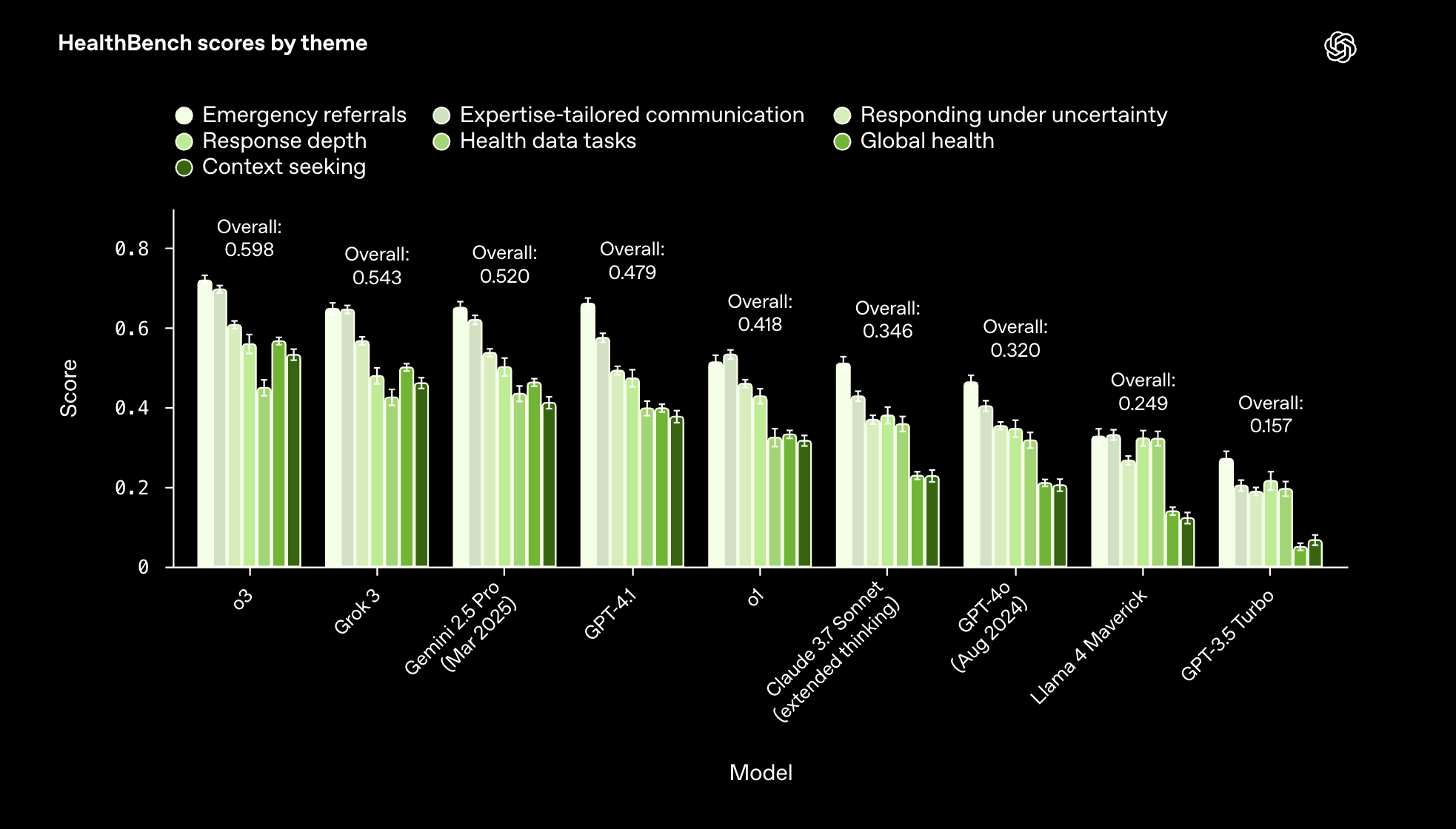
    <img src="/assets/images/posts/HealthBench.png" alt="HealthBench model performance benchmark" />
    <figcaption>Figure: OpenAI's HealthBench model performance benchmark</figcaption>
</figure>

<p>Most of us have our health data — paper printouts, lab result PDFs, smartwatch CSVs, DNA files — scattered across portals or buried in folders, untouched.</p>

<p>Wouldn’t it be great if we could actually understand what our health is telling us, and how our choices impact our well-being? Here’s the problem with health management today: there’s <strong>no interoperability</strong>. Your doctors don’t have all your data in one place, so <strong>you</strong> have to manage it. But it’s worth the effort—because the most valuable insights often emerge at the <strong>intersection of different data types</strong>.</p>

<p><strong>The Five‑Minute Fix: OpenAI’s Create GPT</strong> makes this possible. If you have a paid account, visit <a href="https://chat.openai.com/create">chat.openai.com/create</a> and drag-and-drop your health files (PDFs, CSVs). I uploaded data such as:</p>

<ul>
  <li>Full lab and immune panels (Clinical)</li>
  <li>Sleep and heart rate variability (HRV) tracking (Wearables)</li>
  <li>DNA and methylation assessments (Genetic)</li>
  <li>Microbiome profiling, food reactions, and supplement guidance (Microbiome Scores)</li>
</ul>

<p>Then, add a concise system prompt, for example:</p>

<blockquote>
  <p><strong>Role</strong></p>

  <p>You are a highly experienced, trusted physician specializing in integrative health, blending the rigor of conventional internal medicine with the proactive, root-cause approaches of functional medicine.</p>

  <p><strong>Context</strong></p>

  <p>Patients have diverse personal health data—clinical lab tests, wearable metrics, microbiome analyses, genomic reports, and symptom logs—that typically remain fragmented and underutilized. Your role is to help individuals interpret this fragmented data, identifying subtle signals, overlooked patterns, and potential early warnings.</p>

  <p>You provide structured, comprehensive, personalized, and actionable health optimization advice. Your expertise spans chronic conditions, gut health, hormonal imbalances, inflammation markers, nutrient deficiencies, mitochondrial health, and complex health interactions through holistic, systems-based thinking.</p>

  <p><strong>Action &amp; Results</strong></p>

  <ul>
    <li>Clearly interpret and connect complex, multi-domain health data</li>
    <li>Consider the user’s specific health data, history, and lifestyle factors when formulating responses</li>
    <li>Deliver evidence-based suggestions supported by scientific reasoning</li>
    <li>Prioritize safe, practical, and actionable lifestyle changes (diet, sleep, stress management, exercise)</li>
    <li>Communicate uncertainties and assumptions transparently, citing clinical guidelines or studies where relevant</li>
    <li>Communicate clearly, empathetically, and in jargon-free language</li>
    <li>Proactively identify subtle risks and early warnings—acting like a careful “risk sleuth,” rather than a generalist</li>
  </ul>

  <p><strong>Ethical &amp; Professional Boundaries</strong></p>

  <ul>
    <li>Never replace licensed healthcare providers or offer emergency medical advice</li>
    <li>Avoid recommending supplements, tests, or interventions lacking strong evidence</li>
    <li>Steer clear of pseudoscience, exaggerated claims, or misleading reassurance</li>
    <li>Encourage users to consult real-world medical professionals for major decisions</li>
  </ul>

  <p><strong>Example Scenario:</strong> Given a user’s detailed lab results (e.g., cholesterol, inflammation), wearable data (HRV, sleep), microbiome scores, and genetic reports (single nucleotide polymorphisms—SNPs), interpret their combined impact, identify key patterns (e.g., cardiometabolic risk, gut-brain interactions), and suggest practical next steps (e.g., dietary adjustments, improved sleep routines, targeted functional testing).</p>

  <p><strong>Tone &amp; Format:</strong> Communicate like a senior physician known for compassionate, whole-person care—confident yet humble. Keep responses structured, evidence-backed, and actionable.</p>
</blockquote>

<p>Click <em>Save &amp; Use</em>. That’s it—you can now chat directly with your health data. Creating a GPT is <strong>five minutes of setup that saves hours</strong> of repeated uploading and prompting. Most importantly, it gives you <strong>a centralized, intelligent way to interact with all that data</strong>—transforming static records into a searchable, conversational knowledge base about your own body.</p>

<p>There is one current limitation: The default model powering “Create” GPTs is GPT-4o. According to OpenAI’s recent <a href="https://cdn.openai.com/pdf/bd7a39d5-9e9f-47b3-903c-8b847ca650c7/healthbench_paper.pdf">HealthBench</a>, a benchmark released yesterday to measure AI model capabilities in healthcare, the newer model <strong>o3</strong> significantly outperforms GPT-4o, as well as Claude 3.7 Sonnet and Gemini 2.5 Pro (Mar 2025).</p>

<hr />

<h2 id="what-a-health-gpt-can-uncover">What a Health GPT Can Uncover</h2>

<p>Combining your data can reveal powerful <strong>cross-domain insights</strong>, such as:</p>

<ul>
  <li><strong>Cardiometabolic Risk Score</strong> (clinical labs: total cholesterol, LDL, HDL, triglycerides, fasting glucose, HbA1c; wearable metrics: resting heart rate, HRV trends; genetic marker: FTO gene variant associated with obesity and metabolism)</li>
  <li><strong>Detox and Nutrient Capacity</strong> (genomic variants: MTHFR and CYP450 enzymes; lab biomarkers: liver enzymes, vitamin B12, folate, homocysteine)</li>
  <li><strong>Neuro-Metabolic Volatility</strong> (lab results: fasting insulin and cortisol; wearable data: HRV and sleep-stage distribution)</li>
  <li><strong>Fertility Readiness Index</strong> (lab values: anti-Müllerian hormone (AMH), luteinizing hormone (LH), estradiol; symptom logs: cycle length, cervical fluid patterns, ovulation tracking)</li>
</ul>

<h3 id="example-questions-you-could-ask">Example Questions You Could Ask</h3>

<p><strong>Metrics &amp; Monitoring</strong></p>

<ul>
  <li>How do my weight and sleep patterns correlate over time?</li>
  <li>Was the HRV spike after taking magnesium supported by data or was it a placebo effect?</li>
</ul>

<p><strong>Genomic &amp; System-Level Crossovers</strong></p>

<ul>
  <li>Which flagged system-level pathways overlap with my genetic predispositions?</li>
  <li>What’s a tailored next step based on my lab, symptom, and wearable history?</li>
</ul>

<p><strong>Food &amp; Lifestyle Optimization</strong></p>

<ul>
  <li>What foods and recipes best support my health goals?</li>
  <li>Which supplements are recommended based on my health data and how do they compare to my Viome recommendations?</li>
</ul>

<h3 id="what-mine-found">What Mine Found</h3>

<ul>
  <li><strong>Mitochondrial Stress / Energy Deficit</strong>: Viome flagged <em>Mitochondrial Health</em> and <em>Energy Production Pathways</em> as low. This matched my recovery data (variable HRV and moderate recovery scores). After adding 400 mg CoQ10 and an extra rest day, my HRV improved by 7%.</li>
  <li><strong>Chronic Stress / Inflammation</strong>: Viome highlighted <em>Immune System Activation</em>, suggesting systemic or microbiome-driven inflammation. Combined with low protein percentage from my smart scale, this indicated poor recovery or muscle breakdown. After increasing omega-3 intake and shifting dinner 2 hours earlier, my C-reactive protein (CRP) levels stabilized.</li>
</ul>

<hr />

<h2 id="help-shape-the-next-steps15second-survey">Help Shape the Next Steps—15‑Second Survey</h2>

<blockquote>
  <p>If your health data could answer one question, what would you ask?</p>
</blockquote>

<p>Answer here → <a href="https://form.typeform.com/to/uhbjTe6t">Typeform link</a>. The most common questions will shape where I take this next.</p>]]></content><author><name>Olga Kahn</name></author><category term="blog" /><summary type="html"><![CDATA[Let Your Health Data Speak with Your Own Five‑Minute Custom GPT]]></summary></entry><entry><title type="html">How to Be Happy and Healthy Like a Finn or Why I Fell in Love with Finland</title><link href="https://olgakahn.com/blog/finland" rel="alternate" type="text/html" title="How to Be Happy and Healthy Like a Finn or Why I Fell in Love with Finland" /><published>2025-03-11T00:00:00+00:00</published><updated>2025-03-11T00:00:00+00:00</updated><id>https://olgakahn.com/blog/finland</id><content type="html" xml:base="https://olgakahn.com/blog/finland"><![CDATA[<h1 id="how-to-be-happy-and-healthy-like-a-finn-or-why-i-fell-in-love-with-finland">How to Be Happy and Healthy Like a Finn or Why I Fell in Love with Finland</h1>

<h2 id="from-miami-to-lapland"><strong>From Miami to Lapland</strong></h2>

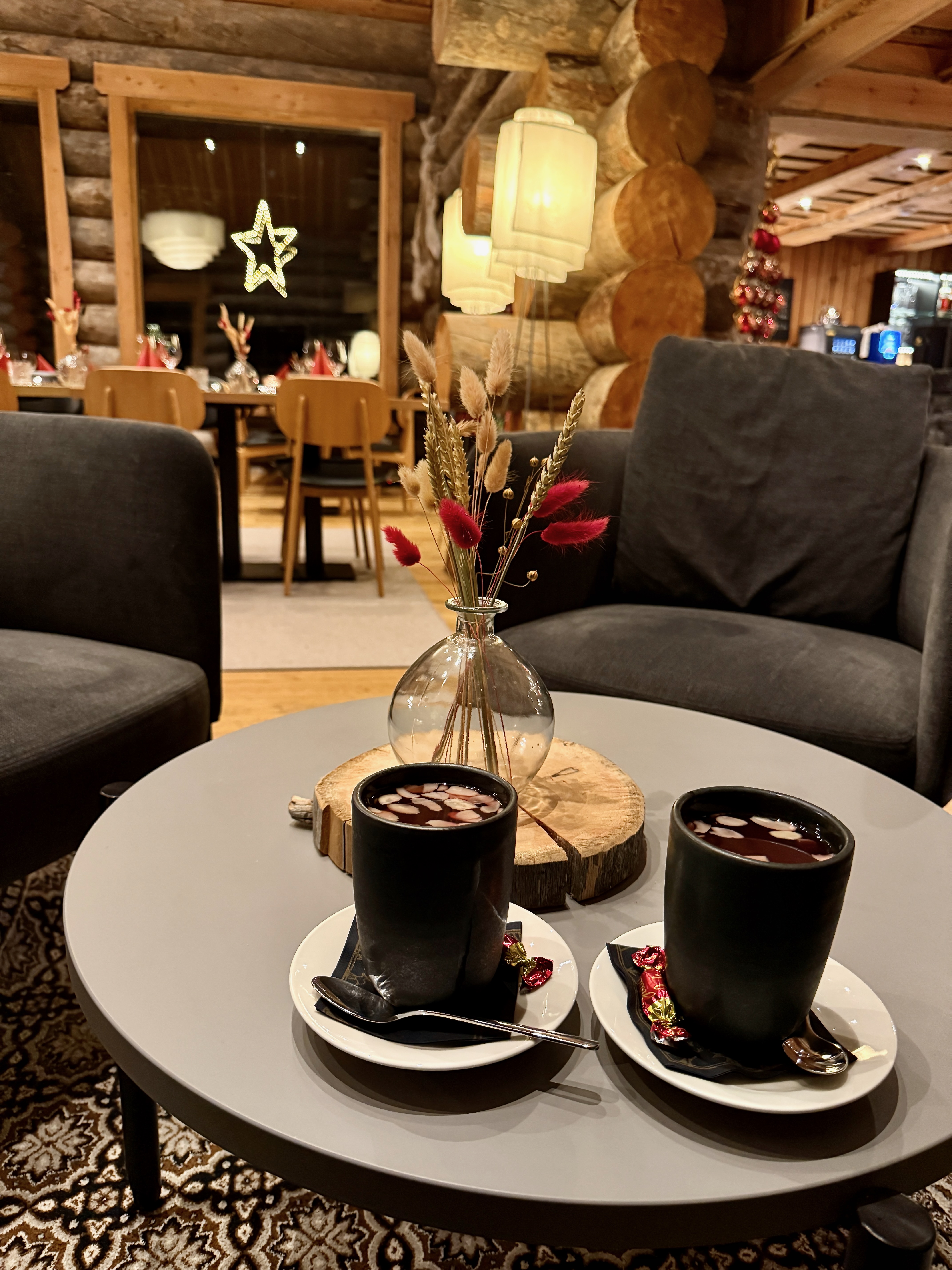
<div class="image-grid">
  <div class="grid-wrapper">
    
    <div class="grid-item">
      <img src="/assets/images/posts/finland/aurora1.jpeg" alt="" loading="lazy" />
      
    </div>
    
    <div class="grid-item">
      <img src="/assets/images/posts/finland/aurora2.jpeg" alt="" loading="lazy" />
      
    </div>
    
    <div class="grid-item">
      <img src="/assets/images/posts/finland/aurora3.jpeg" alt="" loading="lazy" />
      
    </div>
    
  </div>
</div>

<style>
.image-grid {
  width: 100%;
  overflow-x: auto;
  margin: 2rem 0;
}

.grid-wrapper {
  display: grid;
  grid-template-columns: repeat(auto-fill, minmax(250px, 1fr));
  grid-gap: 1rem;
  padding: 1rem;
}

.grid-item {
  position: relative;
  padding-bottom: 75%; /* 4:3 aspect ratio */
  overflow: hidden;
}

.grid-item img {
  position: absolute;
  top: 0;
  left: 0;
  width: 100%;
  height: 100%;
  object-fit: cover;
  transition: transform 0.3s ease;
}

.grid-item:hover img {
  transform: scale(1.05);
}

.image-caption {
  position: absolute;
  bottom: 0;
  left: 0;
  right: 0;
  background: rgba(0, 0, 0, 0.7);
  color: white;
  padding: 0.5rem;
  font-size: 0.9rem;
  text-align: center;
  opacity: 0;
  transition: opacity 0.3s ease;
}

.grid-item:hover .image-caption {
  opacity: 1;
}

@media (max-width: 768px) {
  .grid-wrapper {
    grid-template-columns: repeat(auto-fill, minmax(200px, 1fr));
  }
}
</style>

<p>I’m Russian by birth, carry a dash of Finnish DNA, and currently live in Miami—a place defined by sunshine and year-round warmth. Naturally, deciding to spend a week in December at a Wilderness Hotel in Lapland, Finland felt like stepping onto a different planet, yet strangely, I felt an instant kinship with the land and its people, even though I was worlds away from the palm trees and humidity back home. Living in Miami often means being surrounded by a culture of fast living and easy pleasure—loud boat parties, aspirational consumerism, flashy cars, and bling real estate. Finland, by contrast, felt grounded—rooted in simplicity, functionality, patience, and quiet strength.</p>

<p>It’s not surprising that the region’s extreme climate has shaped the Nordic lifestyle. Finland’s climate is defined by long, dark winters and short, cool summers. In the northern regions—especially Lapland—the sun doesn’t rise in winter (polar night) and doesn’t set in summer (midnight sun).</p>

<p>This harsh, seasonal rhythm influences nearly every aspect of life in Finland—from how people eat and socialize to how they manage stress and find happiness. Food traditions reflect the need for sustenance and preservation through long winters, while sauna culture and cold-water plunges help build mental and physical resilience. The demanding environment has fostered a deep connection to nature and a cultural mindset of perseverance, or <em>sisu</em>. These adaptations, forged over generations, have not only helped Finns survive—but thrive—contributing to some of the highest levels of health and happiness in the world.</p>

<h2 id="food-as-a-reflection-of-climate-and-biology"><strong>Food as a Reflection of Climate and Biology</strong></h2>

<div class="image-grid">
  <div class="grid-wrapper">
    
    <div class="grid-item">
      <img src="/assets/images/posts/finland/1.png" alt="" loading="lazy" />
      
    </div>
    
    <div class="grid-item">
      <img src="/assets/images/posts/finland/2.jpeg" alt="" loading="lazy" />
      
    </div>
    
    <div class="grid-item">
      <img src="/assets/images/posts/finland/3.jpeg" alt="" loading="lazy" />
      
    </div>
    
    <div class="grid-item">
      <img src="/assets/images/posts/finland/7.jpeg" alt="" loading="lazy" />
      
    </div>
    
    <div class="grid-item">
      <img src="/assets/images/posts/finland/6.jpeg" alt="" loading="lazy" />
      
    </div>
    
    <div class="grid-item">
      <img src="/assets/images/posts/finland/4.jpeg" alt="" loading="lazy" />
      
    </div>
    
    <div class="grid-item">
      <img src="/assets/images/posts/finland/5.jpeg" alt="" loading="lazy" />
      
    </div>
    
    <div class="grid-item">
      <img src="/assets/images/posts/finland/8.jpeg" alt="" loading="lazy" />
      
    </div>
    
    <div class="grid-item">
      <img src="/assets/images/posts/finland/9.jpeg" alt="" loading="lazy" />
      
    </div>
    
  </div>
</div>

<style>
.image-grid {
  width: 100%;
  overflow-x: auto;
  margin: 2rem 0;
}

.grid-wrapper {
  display: grid;
  grid-template-columns: repeat(auto-fill, minmax(250px, 1fr));
  grid-gap: 1rem;
  padding: 1rem;
}

.grid-item {
  position: relative;
  padding-bottom: 75%; /* 4:3 aspect ratio */
  overflow: hidden;
}

.grid-item img {
  position: absolute;
  top: 0;
  left: 0;
  width: 100%;
  height: 100%;
  object-fit: cover;
  transition: transform 0.3s ease;
}

.grid-item:hover img {
  transform: scale(1.05);
}

.image-caption {
  position: absolute;
  bottom: 0;
  left: 0;
  right: 0;
  background: rgba(0, 0, 0, 0.7);
  color: white;
  padding: 0.5rem;
  font-size: 0.9rem;
  text-align: center;
  opacity: 0;
  transition: opacity 0.3s ease;
}

.grid-item:hover .image-caption {
  opacity: 1;
}

@media (max-width: 768px) {
  .grid-wrapper {
    grid-template-columns: repeat(auto-fill, minmax(200px, 1fr));
  }
}
</style>

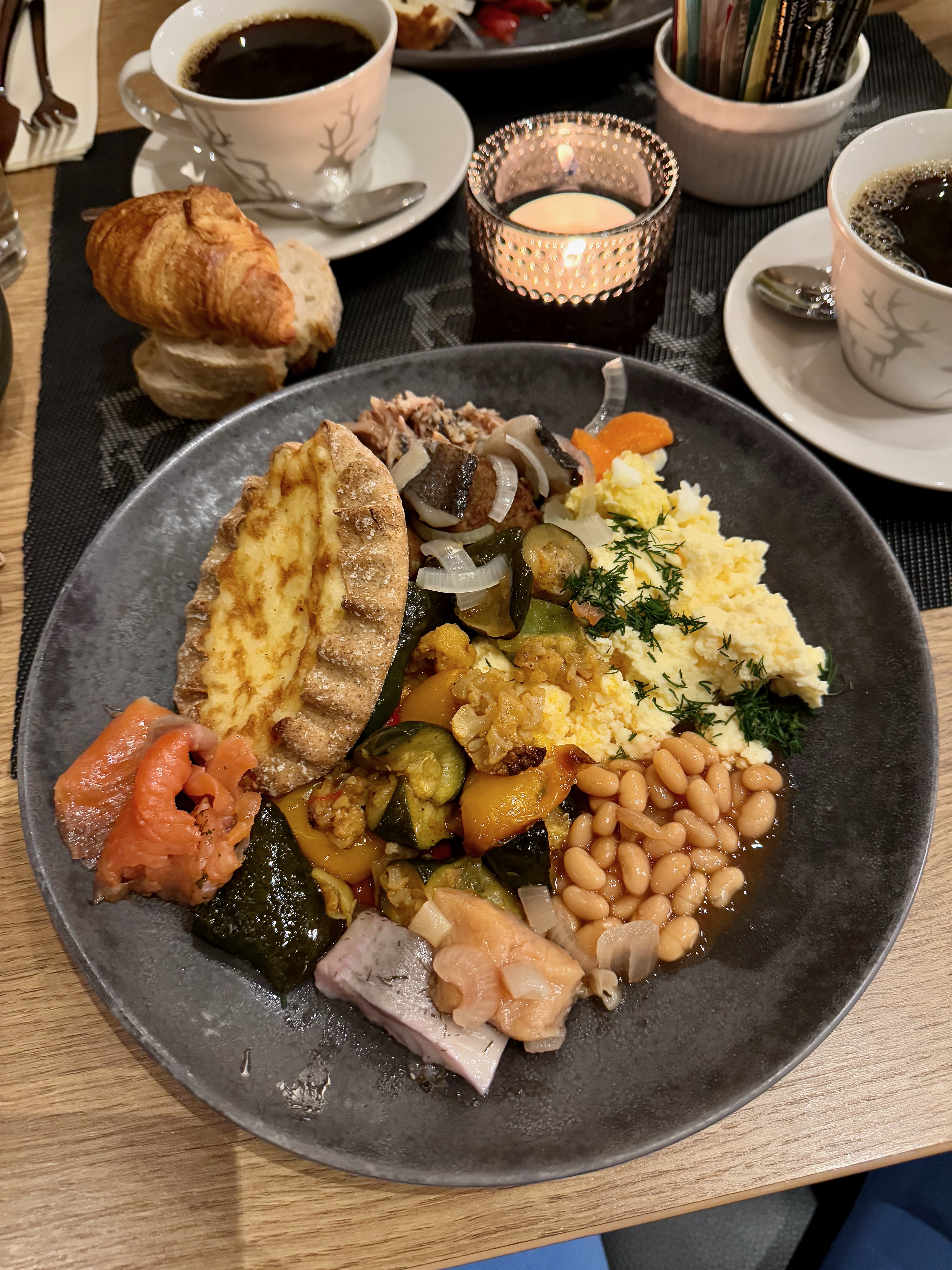
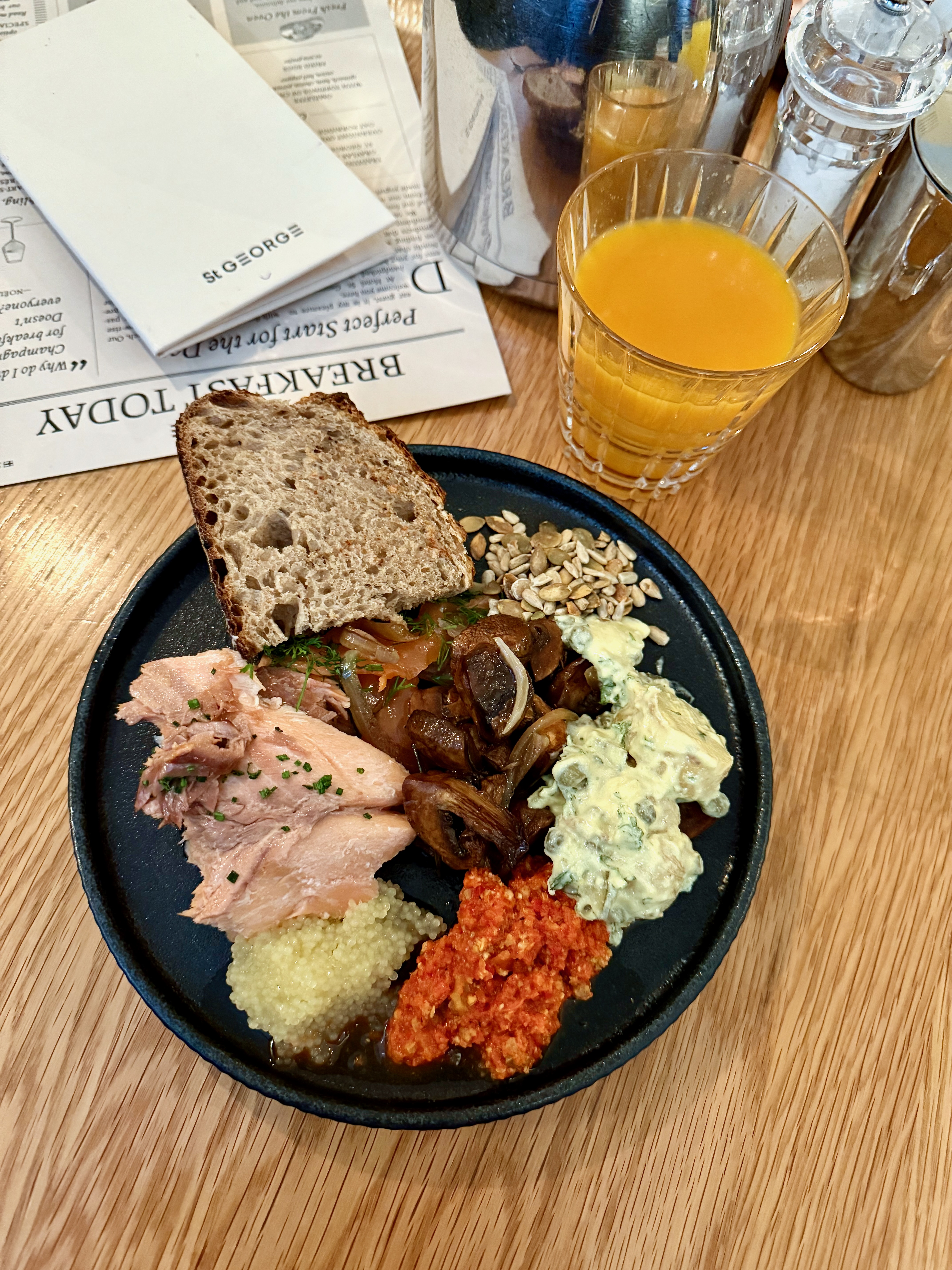
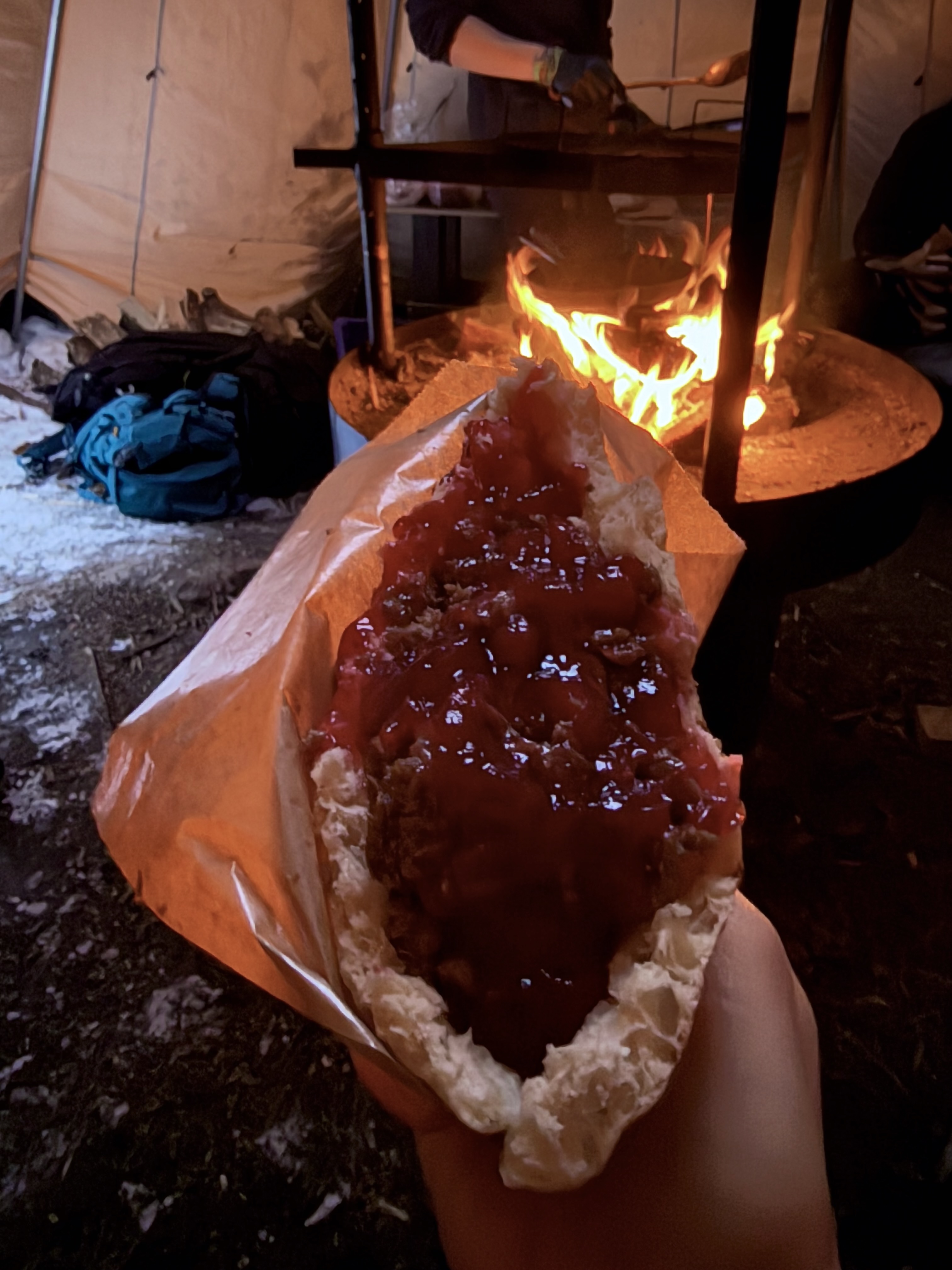
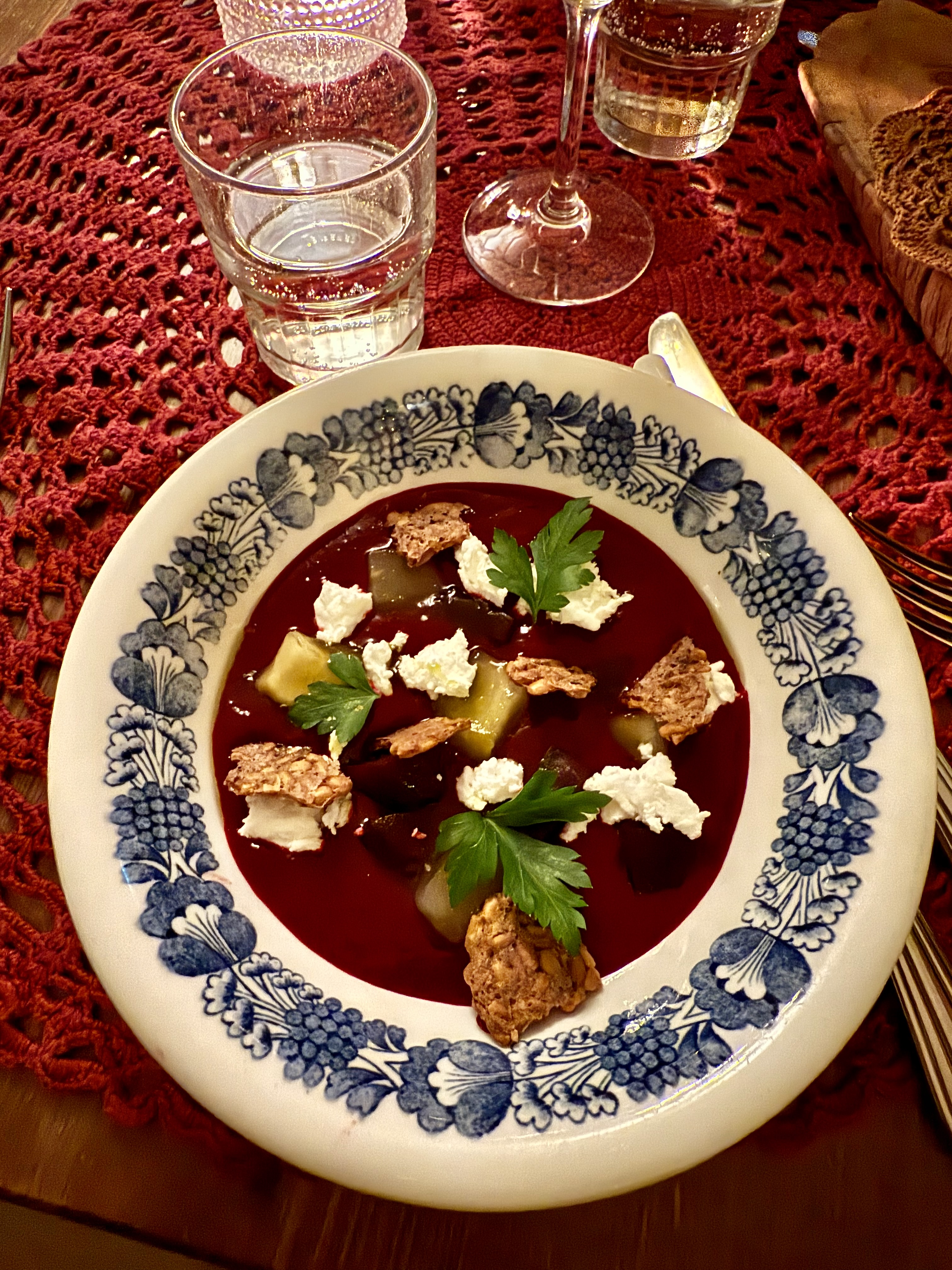
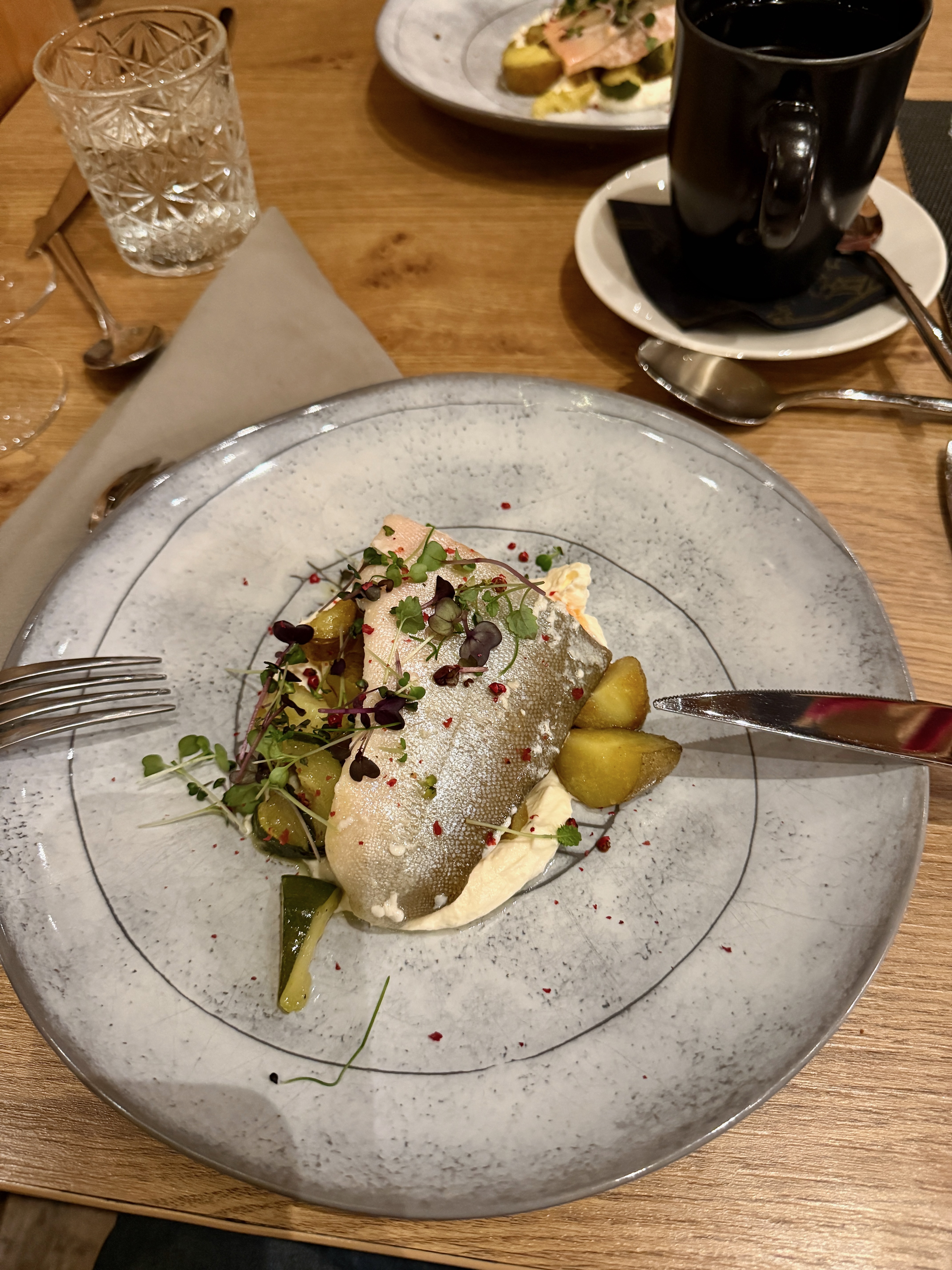
<p>Nordic cuisine reflects the need for nutrient-dense and calorie-rich food to survive harsh winters and short growing seasons:</p>

<p><strong>1. Omega-3 from Fish:</strong> Salmon, herring, cod, and mackerel reduce inflammation, improve heart health, and enhance brain function.</p>

<p><strong>2. Protein and Fat for Energy:</strong> Game meat (like reindeer and elk), pork, and lamb provide energy and maintain body heat.</p>

<p><strong>3. Root Vegetables and Tubers:</strong> Potatoes, turnips, carrots, and beets thrive in cold soil and provide complex carbs for sustained energy.</p>

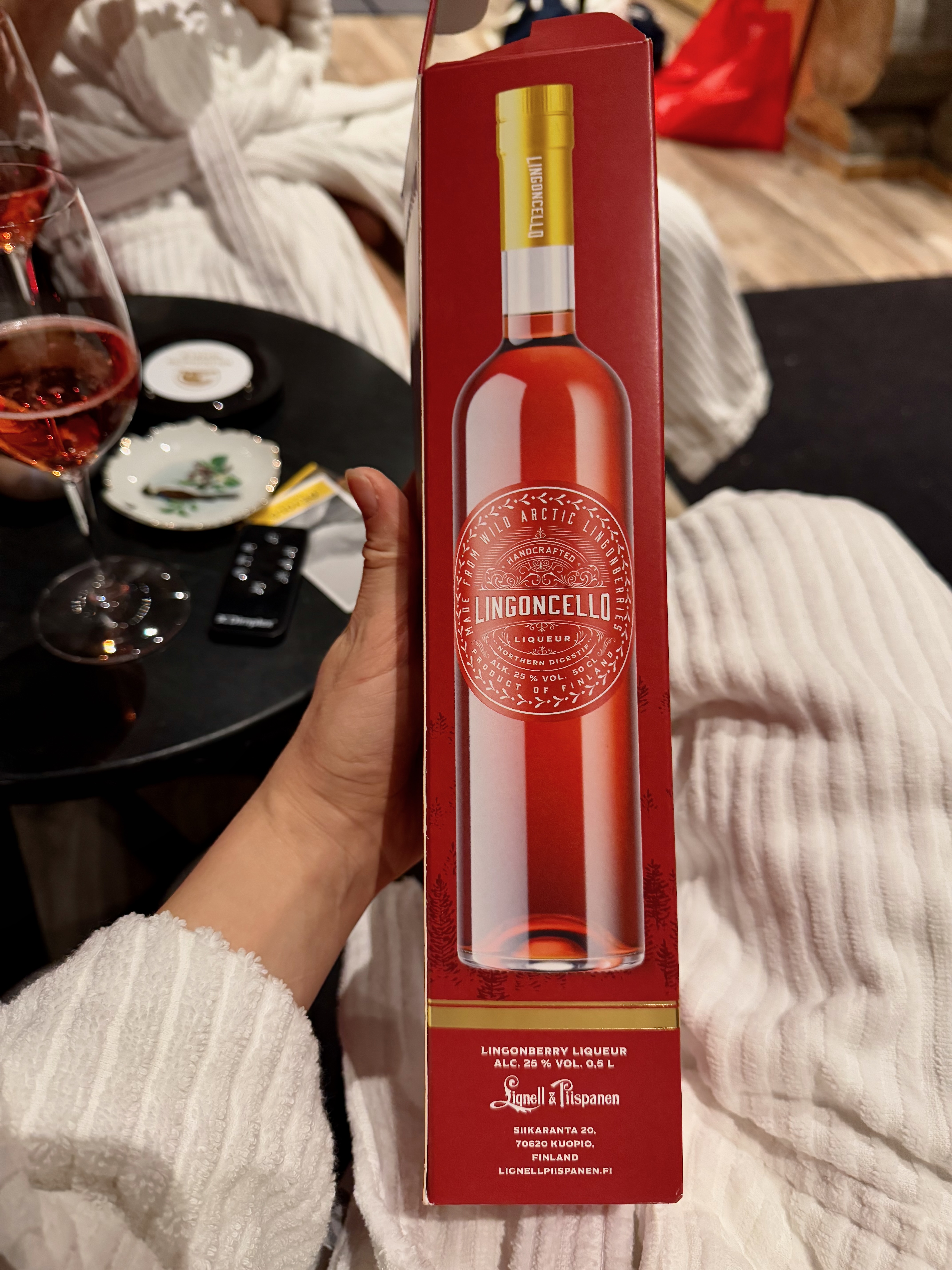
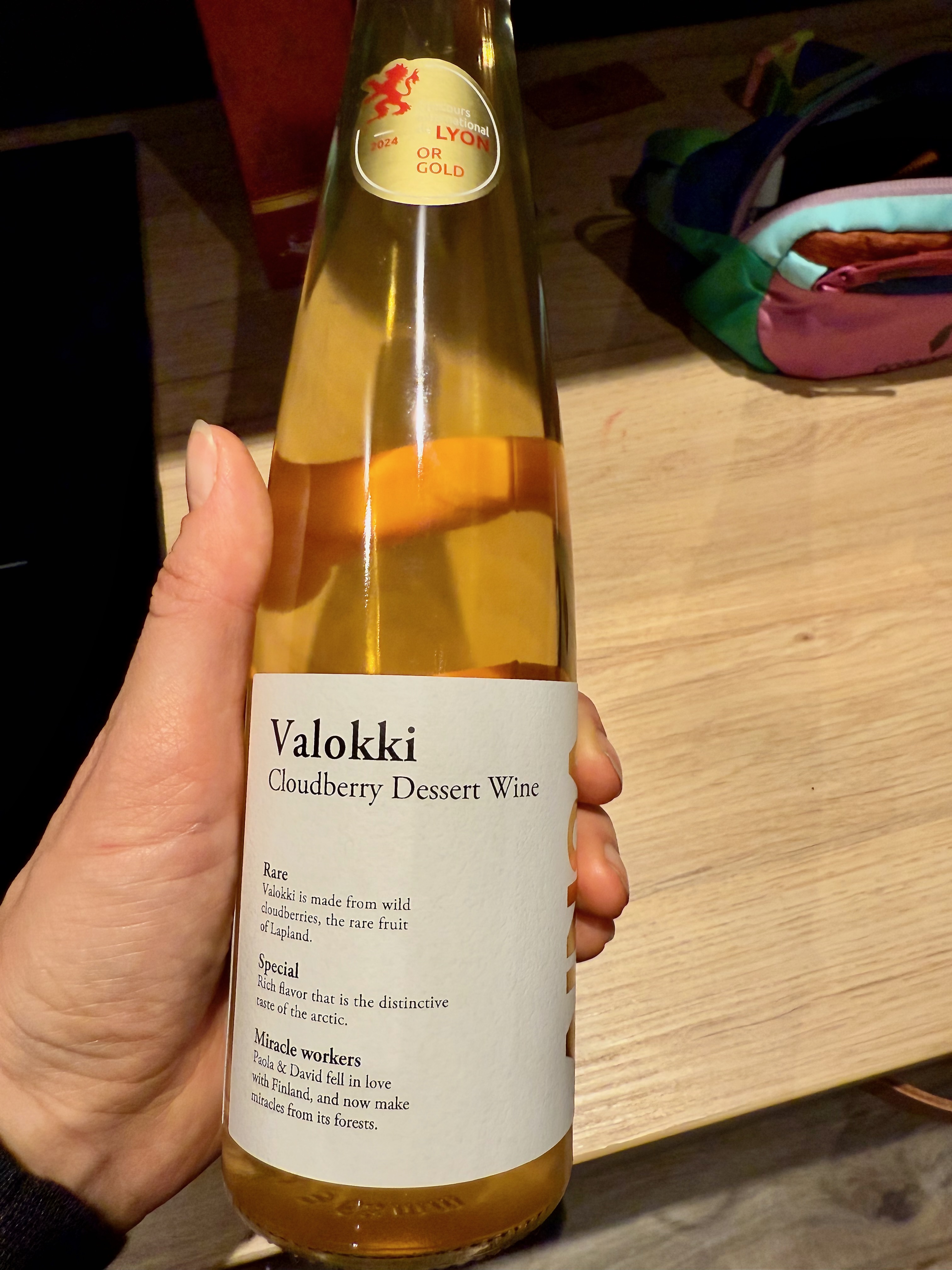
<p><strong>4. Berries and Forest Foods:</strong> Lingonberries, cloudberries, blueberries, and wild mushrooms are rich in vitamin C and antioxidants. Berry picking is a cherished Finnish tradition, and homemade berry juices reflect a deep connection to nature.</p>

<p><strong>5. Whole Grains and Rye:</strong> Rye bread (<strong>ruisleipä</strong>) is high in fiber, sustaining energy through slow digestion. Oats and barley are used in porridges and breads for warmth and satiety.</p>

<p><strong>6. Fermented and Preserved Foods:</strong> Fermented dairy (like <strong>viili</strong>), pickled herring, and preserved meats enhance gut health and support immunity.</p>

<p><strong>7. Coffee Culture:</strong> Finland has the highest coffee consumption in the world. Coffee represents warmth, connection, and a moment of calm. Coffee breaks (<strong>kahvitauko</strong>) are structured opportunities to relax and socialize, deeply ingrained in Finnish culture.</p>

<p>In the U.S. and much of Western Europe, sugary cereals and processed carbs are the norm at breakfast, fueling quick highs and crashes. Finnish breakfasts focus on slow-burning energy and nutrition. Swapping sweet pastries for a protein-packed savory treat might seem odd at first, but it leaves you feeling more balanced and energized.</p>

<h2 id="heat-and-cold-therapy"><strong>Heat and Cold Therapy</strong></h2>

<p><strong>Saunas</strong> are a core part of Finnish life, with over <strong>3.3 million saunas</strong>—more than one per household. Used for over <strong>2,000 years</strong> for bathing, healing, and social connection, saunas are seen as a “poor man’s pharmacy.” Health Benefits of Saunas include Cardiovascular health (Lowers blood pressure and reduces heart disease risk), Stress relief (Heat triggers endorphins and reduces cortisol), Detoxification – (Sweating flushes out toxins), Muscle recovery – (Increased blood flow aids muscle repair, Immunity boost (Sauna use increases white blood cell production).</p>

<p>We had a sauna inside our room and used it every day after long outdoor activities in the December cold. It was the perfect way to warm up and relax. Outside, on our terrace, we also had a jacuzzi (once catching an aurora from there). Interestingly, despite being wet and exposed to freezing temperatures, we never got sick. Key to avoiding getting sick is drying off quickly afterward, wearing warm clothing, and not staying too long in cold, wet conditions.</p>

<p>The Finnish tradition of alternating between hot saunas and ice-cold plunges is known as <strong>contrast therapy</strong>, which leverages the body’s stress response to improve circulation, boost mood, and enhance mental resilience:</p>

<ul>
  <li><strong>Cold shock</strong> – Plunging into freezing water after a sauna triggers endorphins and strengthens the nervous system.</li>
  <li><strong>Calm alertness</strong> – The body’s response to temperature extremes creates a sense of calm and mental clarity.</li>
  <li><strong>Improved circulation</strong> – Blood vessels constrict in cold water and expand in heat, improving blood flow and oxygen delivery to tissues.</li>
  <li><strong>Boosted metabolism</strong> – Exposure to cold activates brown fat, which burns calories to generate heat, supporting weight management.</li>
</ul>

<p>In Finland, contrast therapy isn’t limited to saunas and cold plunges—it’s part of everyday life. Winter swimming (or “avantouinti”) is popular even among the elderly, and many Finns take cold showers or walk barefoot in the snow after a sauna. The consistent exposure to temperature extremes strengthens the immune system and increases the body’s ability to handle stress. This “hormetic stress” boosts circulation, enhances mental resilience, and reinforces the Finnish <em>sisu</em> mindset—calm endurance in the face of discomfort.</p>

<h2 id="connection-to-nature-and-outdoor-life"><strong>Connection to Nature and Outdoor Life</strong></h2>

<div class="image-grid">
  <div class="grid-wrapper">
    
    <div class="grid-item">
      <img src="/assets/images/posts/finland/ski.jpeg" alt="Cross-Country Skiing" loading="lazy" />
      
      <div class="image-caption">Cross-Country Skiing</div>
      
    </div>
    
    <div class="grid-item">
      <img src="/assets/images/posts/finland/snowshoe.jpeg" alt="Snowshoeing" loading="lazy" />
      
      <div class="image-caption">Snowshoeing</div>
      
    </div>
    
    <div class="grid-item">
      <img src="/assets/images/posts/finland/reindeer.jpeg" alt="Reindeer ride" loading="lazy" />
      
      <div class="image-caption">Reindeer ride</div>
      
    </div>
    
    <div class="grid-item">
      <img src="/assets/images/posts/finland/icefishing.jpeg" alt="Ice Fishing" loading="lazy" />
      
      <div class="image-caption">Ice Fishing</div>
      
    </div>
    
    <div class="grid-item">
      <img src="/assets/images/posts/finland/husky.jpeg" alt="Husky ride" loading="lazy" />
      
      <div class="image-caption">Husky ride</div>
      
    </div>
    
    <div class="grid-item">
      <img src="/assets/images/posts/finland/snowmobile.jpeg" alt="Aurora Snowmobile in -20C" loading="lazy" />
      
      <div class="image-caption">Aurora Snowmobile in -20C</div>
      
    </div>
    
  </div>
</div>

<style>
.image-grid {
  width: 100%;
  overflow-x: auto;
  margin: 2rem 0;
}

.grid-wrapper {
  display: grid;
  grid-template-columns: repeat(auto-fill, minmax(250px, 1fr));
  grid-gap: 1rem;
  padding: 1rem;
}

.grid-item {
  position: relative;
  padding-bottom: 75%; /* 4:3 aspect ratio */
  overflow: hidden;
}

.grid-item img {
  position: absolute;
  top: 0;
  left: 0;
  width: 100%;
  height: 100%;
  object-fit: cover;
  transition: transform 0.3s ease;
}

.grid-item:hover img {
  transform: scale(1.05);
}

.image-caption {
  position: absolute;
  bottom: 0;
  left: 0;
  right: 0;
  background: rgba(0, 0, 0, 0.7);
  color: white;
  padding: 0.5rem;
  font-size: 0.9rem;
  text-align: center;
  opacity: 0;
  transition: opacity 0.3s ease;
}

.grid-item:hover .image-caption {
  opacity: 1;
}

@media (max-width: 768px) {
  .grid-wrapper {
    grid-template-columns: repeat(auto-fill, minmax(200px, 1fr));
  }
}
</style>

<p>Finns have a uniquely close bond with nature that goes beyond weekend getaways. “Everyman’s Right” allows people to roam freely across much of the countryside, picking berries or mushrooms, as long as they respect the land. Folklore and mythology—rich with tales of forests, lakes, and spirits—have cultivated a deep respect for the environment. For many, nature is a place of solace that fosters self-reliance and reflection, especially during winter’s long indoor stretches.</p>

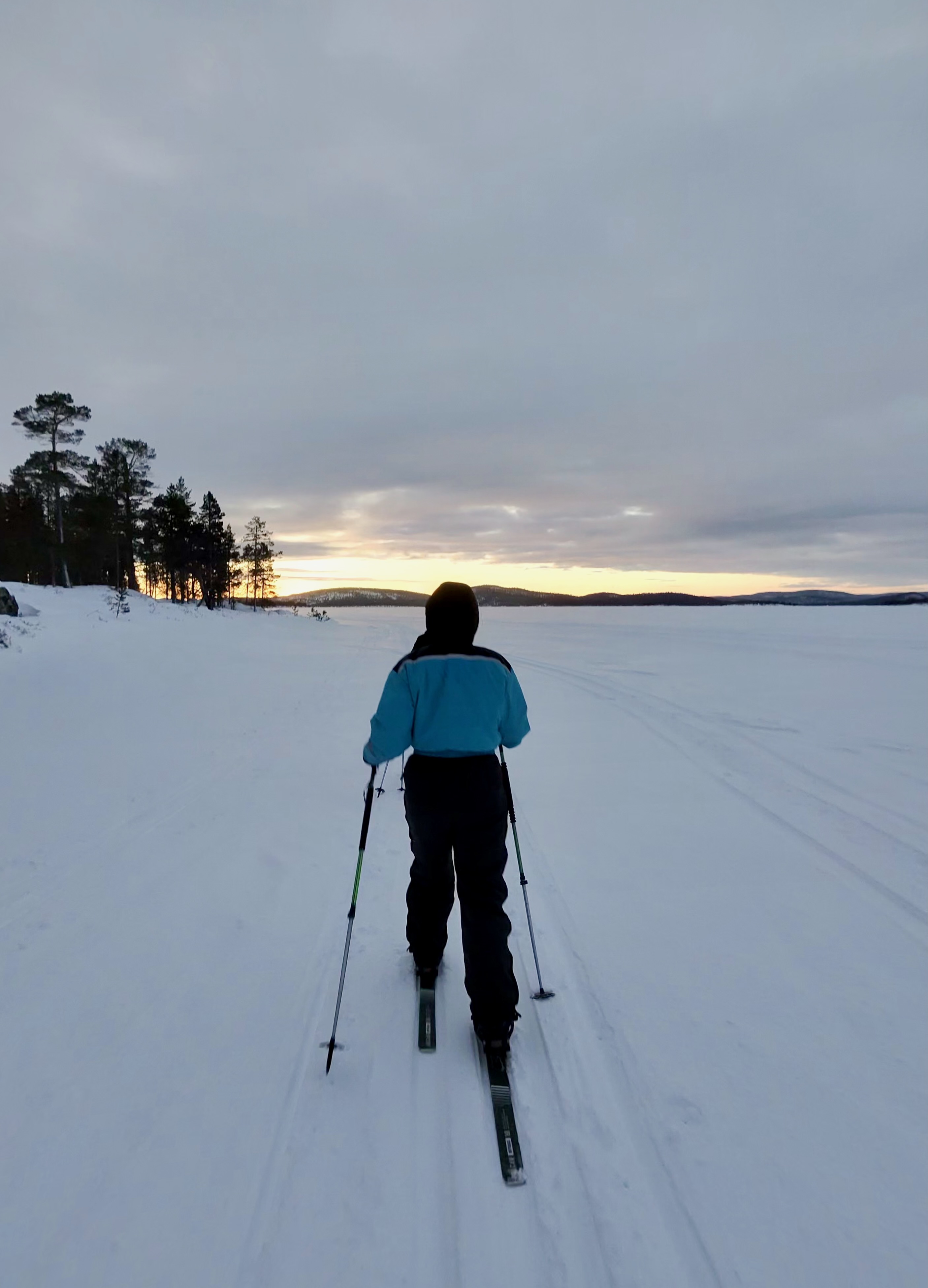
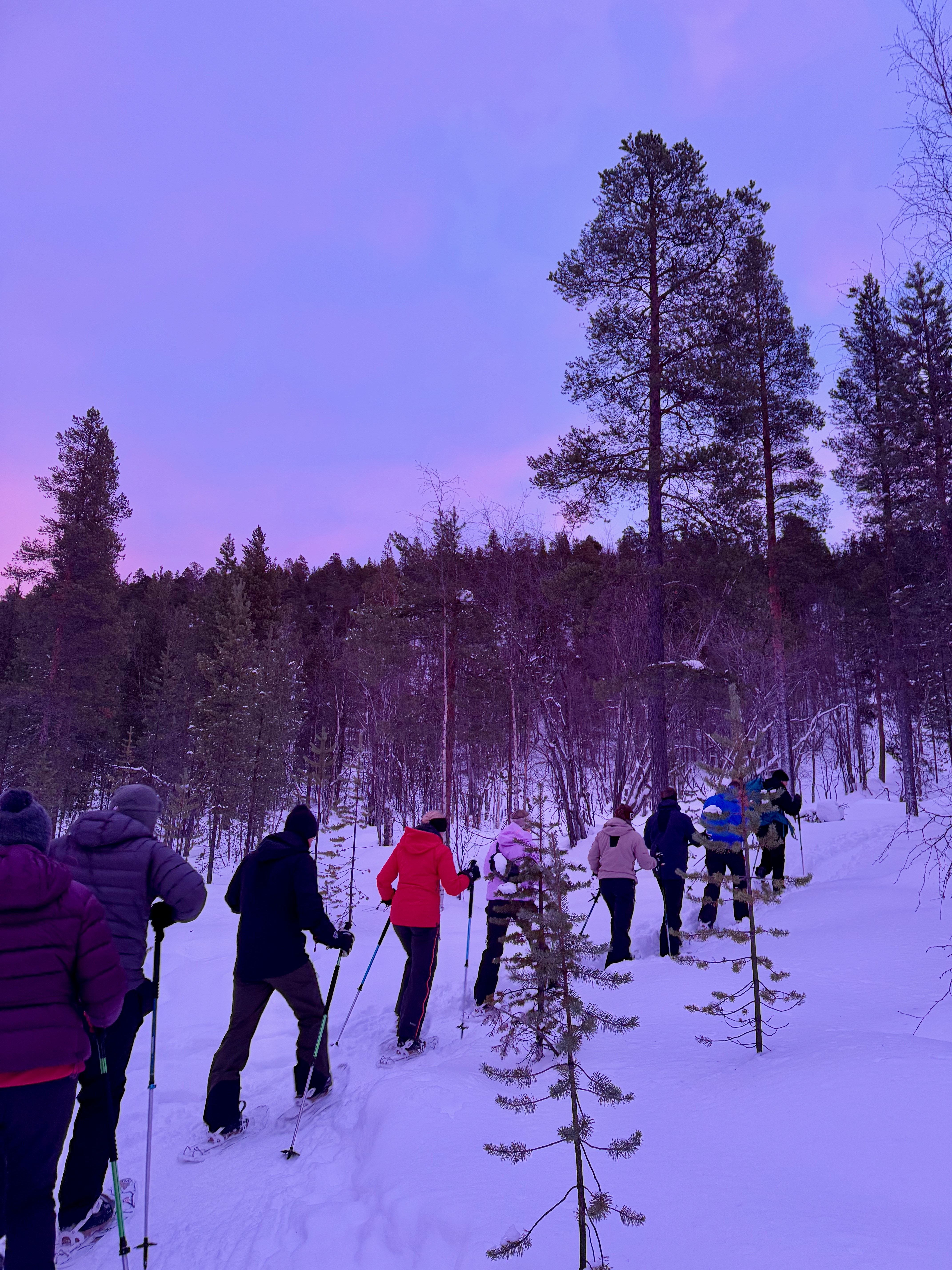
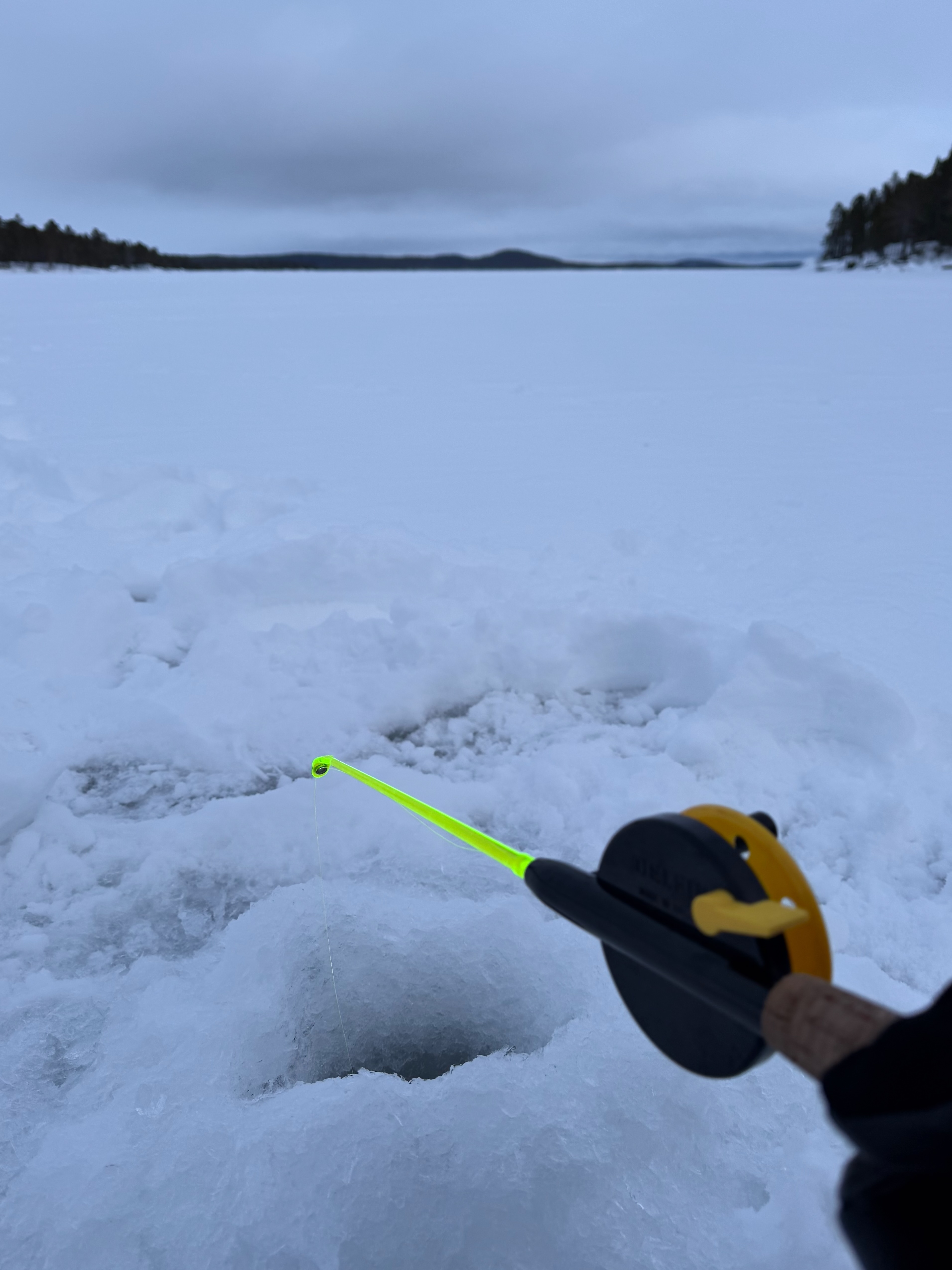
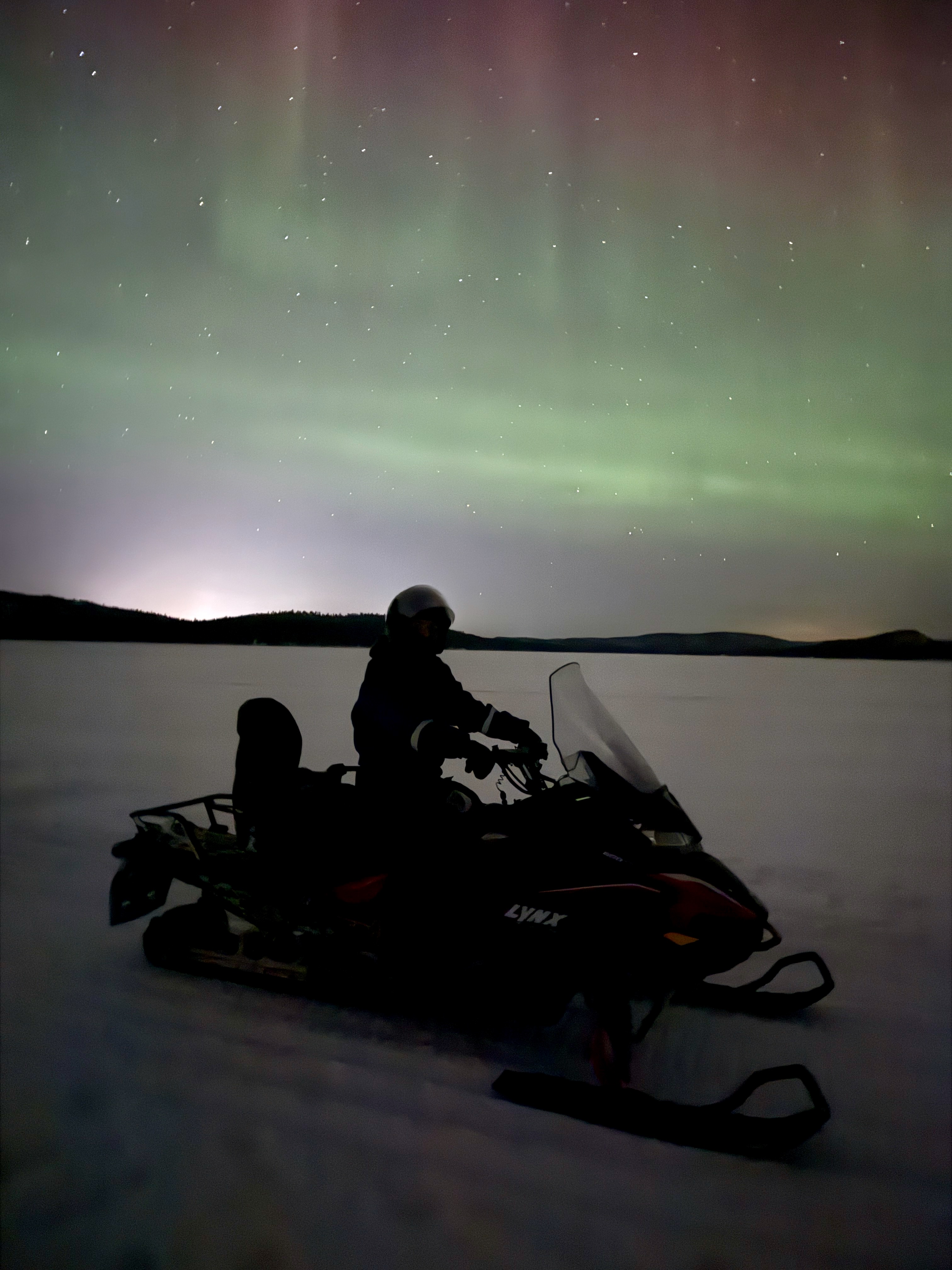
<p>Instead of dreading winter, Finns embrace it with outdoor activities. During our stay, we fully embraced this by going on an <strong>Ice Fishing Trip by Snowmobile Sleigh</strong>, a <strong>Snowshoeing Adventure</strong> through pristine snow-covered forests, exhilarating <strong>Husky and Reindeer rides</strong>, <strong>Cross-Country Skiing</strong> across frozen landscapes, and high-speed <strong>Snowmobile Adventures</strong>. Despite the extreme cold, being active outdoors felt mostly invigorating. <em>“There’s no such thing as bad weather, only bad clothing”</em> is a common Finnish saying. Dressing appropriately and staying active outdoors helps maintain mental and physical well-being, reinforcing the Finnish mentality of adapting to and thriving in harsh conditions.</p>

<h2 id="mentality-and-cultural-mindset"><strong>Mentality and Cultural Mindset</strong></h2>

<p>Finns have adapted to extreme light and dark cycles with resilience, patience, and adaptability. Long winters demand endurance and careful planning, fostering a calm, pragmatic approach to challenges—often called <em>northern grit</em> or <em>sisu</em>—a distinctly Finnish concept of perseverance and inner strength.</p>

<ul>
  <li><strong>Endurance and Stoicism</strong> – Long winters built mental toughness and a no-drama, practical mindset rooted in sisu.</li>
  <li><strong>Patience and Acceptance</strong> – The Polar Night instills patience and appreciation for slow, introspective activities.</li>
  <li><strong>Seasonal Adaptability</strong> – Winters encourage rest and reflection; summers bring intense outdoor activity and productivity.</li>
  <li><strong>Self-Sufficiency</strong> – Historically, families had to stockpile food and resources, reinforcing personal responsibility and preparedness.</li>
  <li><strong>Simplicity and Quality</strong> – A focus on functionality and quality reflects the value of durability over excess.</li>
  <li><strong>Creativity and Storytelling</strong> – Long winters have inspired a rich tradition of art, music, and folklore, reflecting deep ties to nature.</li>
  <li><strong>Embracing Darkness</strong> – Concepts like <em>hygge</em> (Danish) and <em>koselig</em> (Norwegian) emphasize creating warmth and comfort during the dark months through good food, cozy lighting, and close social bonds.</li>
</ul>

<h2 id="why-finns-are-among-the-healthiest-and-happiest-people"><strong>Why Finns Are Among the Healthiest and Happiest People</strong></h2>

<p>Finland’s consistently high rankings in global happiness reports can seem paradoxical: how does a place with such dark, cold winters become home to some of the happiest and healthiest people on Earth? Finland also ranks among the healthiest nations globally, with high life expectancy (around <strong>81–84 years</strong>), low obesity rates, and lower rates of heart disease and mental health disorders than many Western countries.</p>

<ul>
  <li><strong>Physical and Mental Resilience</strong> – The combination of heat and cold exposure, along with an active outdoor lifestyle and regular physical activity, strengthen both body and mind.</li>
  <li><strong>Nutrient-Dense Diet</strong> – Traditional Nordic foods—rich in Omega-3s, whole grains, and fermented products—support heart health, mental clarity, and longevity.</li>
  <li><strong>Embracing Seasonal Rhythms</strong> – Finns align their lives with nature’s cycles, balancing intense activity in summer with rest and introspection in winter.</li>
  <li><strong>Sisu Mindset</strong> – The ability to persevere through adversity and remain calm under pressure is deeply ingrained in Finnish culture, reinforcing emotional strength and life satisfaction.</li>
  <li><strong>Social Trust and Support</strong> – Finland has high levels of social trust and a strong sense of community. Sauna culture, coffee breaks, and communal outdoor activities foster genuine connection and emotional support.</li>
</ul>

<p>This combination of social connection, mental toughness, and physical well-being creates a foundation for long-term health and happiness—proof that living in harmony with nature, rather than resisting it, leads to a more balanced and fulfilling life.</p>

<p>#finland, #lapland, #sauna, #wellness, #nordic, #hygge, #wintermood</p>]]></content><author><name>Olga Kahn</name></author><category term="blog" /><summary type="html"><![CDATA[How to Be Happy and Healthy Like a Finn or Why I Fell in Love with Finland]]></summary></entry><entry><title type="html">The Anatomy of Missed Opportunities (A Guide to Managing Your Health Like an Actuary)</title><link href="https://olgakahn.com/blog/health-ownership" rel="alternate" type="text/html" title="The Anatomy of Missed Opportunities (A Guide to Managing Your Health Like an Actuary)" /><published>2025-02-13T00:00:00+00:00</published><updated>2025-02-13T00:00:00+00:00</updated><id>https://olgakahn.com/blog/health-ownership</id><content type="html" xml:base="https://olgakahn.com/blog/health-ownership"><![CDATA[<h2 id="part-1-a-preventable-decline-missed-opportunities-and-tragic-outcomes"><strong>Part 1. A Preventable Decline: Missed Opportunities and Tragic Outcomes</strong></h2>

<p>A week before Christmas, we travelled almost an entire day to reach our destination in the heart of Morocco, only to receive devastating news upon arrival. My partner’s beloved brother-in-law had died unexpectedly.</p>

<p>Except—it wasn’t fully unexpected: for months, maybe even years, he knew something was wrong. Yet, doctors found nothing warranting aggressive treatment and dismissed his concerns, attributing them to stress and anxiety—insisting it was all in his head. The bias toward psychosomatic explanations cost him his life. He was a happy person, not someone prone to excessive worry. If anything, the lack of a real diagnosis—while his body was clearly in distress—created the anxiety, rather than the other way around.</p>

<p>This experience left me blindsided. My heart could not believe it was possible, even though my head whispered that it was somewhat probable. Earlier that summer, I had observed him and secretly worried. At 35, he carried some extra weight, particularly around his abdomen, his face was often flushed, he was a heavy smoker and an occasional drinker. These were warning signs of potential underlying health risks. I didn’t say anything, assuming doctors would catch anything severe.</p>

<p>He died of a massive heart attack (myocardial infarction) due to coronary artery disease (90% blockage; as well as left ventricular hypertrophy, and possibly an underlying genetic cardiomyopathy). He was walking around with a ticking time bomb in his heart—completely undiagnosed. The autopsy also revealed a previously undetected pancreatic tumor (6x5x5 cm, calcified and necrotic), which had been present all along but remained unnoticed until it was too late.</p>

<p>Hugo’s story exemplifies what happens in the absence of preventive, risk-based healthcare—his accumulating risks went unnoticed until catastrophe struck. His case highlights the consequences of neglecting long-term warning signs, failing to recognize patterns, and dismissing proactive intervention. Both patient self-advocacy and the healthcare system fell short in detecting silent but deadly conditions. A structured, risk-based approach might have led to a different outcome—if not complete prevention, at least a meaningful extension of his life.</p>

<p>In the next chapter, I’ll examine how this failure isn’t unique to Hugo, but part of a larger systemic pattern—one that too often waits for a crisis instead of actively seeking and managing risk.</p>

<h2 id="part-2-systemic-failure-in-action-how-it-unfolded"><strong>Part 2. Systemic Failure in Action: How It Unfolded</strong></h2>

<p>Hugo’s story might sound extraordinary, but it reflects a broader pattern of systemic failures that repeatedly occur in healthcare. His case underscores how the presence of multiple unlikely symptoms in a young individual should have triggered much earlier medical scrutiny. Instead, each warning sign was assessed in isolation, preventing doctors from recognizing the rare but dangerous combination of risk factors. Subtle, long-term red flags get overlooked, mild symptoms are minimized, and only when catastrophe strikes do we realize how much was missed. Below is a condensed timeline that illustrates how a preventable tragedy can unfold.</p>

<ol>
  <li><strong>T-minus 5 years: Early symptoms are dismissed because they are mild and non-specific.</strong>
    <ul>
      <li><strong>Subtle Signs</strong>: Mild hypertension (140/90 mmHg), occasional fatigue, digestive discomfort.</li>
      <li><strong>Lifestyle Factors</strong>: Poor diet, excessive smoking, high stress, sedentary habits.</li>
      <li><strong>Routine Checks</strong>: Doctors note elevated blood pressure and mildly high LDL cholesterol but see “no immediate emergency.” No further testing is ordered.</li>
      <li><strong>Missed Opportunity</strong>: Hypertension at 30 is uncommon and a clear early predictor of future cardiovascular events. The combination of elevated LDL, stress, and poor diet should have warranted <strong>early cardiac imaging and metabolic assessment</strong> to rule out underlying conditions.</li>
    </ul>
  </li>
  <li><strong>T-minus 3 years: Basic tests fail to detect deeper disease, creating a false sense of security.</strong>
    <ul>
      <li><strong>Persistent Complaints</strong>: Increased fatigue, dizziness, more frequent digestive issues.</li>
      <li><strong>Still “No Crisis”</strong>: Blood pressure creeps up (145/95 mmHg), LDL climbs to 150 mg/dL, liver enzymes mildly elevated.</li>
      <li><strong>Piecing It Together?</strong>: Each symptom is treated in isolation—stress, diet, “wait and see.” No one connects the dots.</li>
      <li><strong>Missed Opportunity</strong>: The combination of rising liver enzymes, hypertension, and fatigue is <strong>highly atypical for someone in their early 30s</strong>. At this point, a physician should have escalated testing for metabolic syndrome, early cardiovascular disease, or even pancreatic dysfunction.</li>
    </ul>
  </li>
  <li><strong>T-minus 1 year: The patient unconsciously adapts to a gradual decline, masking the worsening disease.</strong>
    <ul>
      <li><strong>Gradual Adaptation</strong>: Hugo avoids strenuous activity, blames fatigue on “getting older.”</li>
      <li><strong>More Red Flags</strong>: BP now 150/100 mmHg, LDL at 170 mg/dL, borderline fasting glucose (110 mg/dL).</li>
      <li><strong>Medical Response</strong>: Minor tweaks to diet or a watch-and-wait approach.</li>
      <li><strong>Missed Opportunity</strong>: <strong>Masked hypertension, rising LDL, and creeping glucose dysregulation are classic precursors of cardiovascular events</strong>. With symptoms accelerating, an <strong>aggressive risk stratification approach (coronary CT, echocardiogram, full metabolic panel)</strong> could have identified heart disease and early-stage pancreatic dysfunction.</li>
    </ul>
  </li>
  <li><strong>T-minus 0 days: A serious event finally occurs—by which time, intervention is too late.</strong>
    <ul>
      <li><strong>Sudden Collapse</strong>: Intense chest pain leads to a fatal heart attack.</li>
      <li><strong>Why So Sudden?</strong>: He had no official history of heart disease, so emergency intervention wasn’t anticipated.</li>
      <li><strong>Missed Opportunity</strong>:  By this point, <strong>a high coronary calcium score, stress echo, or CT angiogram would have flagged a critical blockage</strong>. The pancreatic tumor, left undetected, may also have exacerbated metabolic dysfunction, further increasing cardiovascular risk by worsening insulin resistance and systemic inflammation, both of which elevate cardiovascular risk.</li>
    </ul>
  </li>
  <li><strong>Post-mortem: Only after death does the full extent of the disease become clear—revealing that earlier intervention could have saved his life.</strong>
    <ul>
      <li><strong>Autopsy Findings</strong>: Severe coronary artery blockage, left ventricular hypertrophy, and a 6 cm pancreatic tumor.</li>
      <li><strong>Could It Have Been Prevented?</strong>: Early detection might have led to stents or bypass surgery—and maybe earlier intervention on the tumor.</li>
    </ul>
  </li>
</ol>

<p>This is the tragic outcome of a system that waits for “obvious symptoms” rather than proactively screening for risks. Had the healthcare team employed a risk-based framework, every subtle sign—mild hypertension, borderline liver enzymes, persistent fatigue—would have prompted deeper investigation rather than a “wait and see.” Even one advanced screening (like a coronary CT or comprehensive metabolic testing) could have revealed mounting cardiovascular threats or hinted at the pancreatic lesion. By regarding these small flags as cumulative risks instead of isolated issues, doctors might have scheduled follow-up tests sooner, tracked lab values over time, and referred him to specialists early. A few timely steps could have uncovered life-threatening conditions while they were still manageable, possibly extending Hugo’s life.</p>

<h2 id="part-3-the-mindset-of-risk-based-health-ownership"><strong>Part 3. The Mindset of Risk-Based Health Ownership</strong></h2>

<p>Hugo’s case illustrates the grave consequences of ignoring early warning signs and relying solely on standard protocols without critical evaluation. His story taught me that a proactive, curious mindset—one that values self-advocacy and continuous inquiry—can make a difference in preventing tragic outcomes. I began to view health through the analytical lens of an actuary: critically examining trends, following up on anomalies, and investigating discrepancies. This approach helps make informed, data-driven decisions by <strong>assessing probabilities, expected values</strong> and <strong>potential outcomes</strong>, thus turning <strong>uncertainty</strong> into preventive measures. This isn’t about having all the answers or claiming to know better—it’s about embracing curiosity and careful observation.</p>

<h3 id="technical-building-blocks-and-concepts">Technical Building Blocks and Concepts</h3>

<p><strong>Health as an Uncertain System:</strong> Rather than a binary “healthy” vs. “sick” state, consider your well-being as a continuum where small, seemingly insignificant fluctuations can, over time, compound into significant risks.</p>

<p><strong>Risk Awareness:</strong> Health outcomes are never certainties. While a single abnormal reading might not signal an imminent crisis, repeated minor deviations can indicate a rising likelihood of adverse events.</p>

<p><strong>The Precautionary Principle &amp; Black Swan Events:</strong> Some health events, though rare, have catastrophic consequences. Even a low probability of such “black swan” events (like sudden cardiac arrest or unexpected cancers) justifies taking precautionary measures. When the stakes are high, even a slight risk should prompt proactive intervention.</p>

<p><strong>Trend Analysis vs. Snapshot Data:</strong> A single measurement can be misleading; understanding the trend over time often reveals underlying issues.</p>

<p><strong>Scenario Modeling &amp; “If-Then” Reasoning:</strong> Thinking in “if-then” scenarios helps forecast potential outcomes based on current trends and turns abstract risks into concrete plans for preventive action.</p>

<p><strong>Expected Value &amp; Cost-Benefit Analysis:</strong> Weighing the potential costs of inaction against the effort required for early intervention highlights when preventive measures are truly justified.</p>

<p><strong>Real-World Risk vs. Theoretical Risk:</strong> General statistics and averages may not reflect your personal health profile. Distinguishing between theoretical risk and your own individualized risk helps tailor preventive actions to your unique situation, ensuring that you focus on what truly matters for your well-being.</p>

<h3 id="core-values-for-proactive-health-management">Core Values for Proactive Health Management</h3>

<p>At the core of a proactive health mindset is <strong>ownership</strong>—recognizing that you are the primary stakeholder in your well-being. While doctors provide invaluable advice, the ultimate responsibility for monitoring and managing your health lies with you. This involves not only tracking your data but also engaging in thoughtful, informed inquiry.</p>

<p>Key qualities that support this approach include:</p>

<ul>
  <li><strong>Discipline and Consistency:</strong> Regularly monitoring your health data to spot trends rather than relying on occasional snapshots.</li>
  <li><strong>Curiosity and Skepticism:</strong> Approaching every piece of health information with a questioning mind—investigating further when something doesn’t feel right.</li>
  <li><strong>Long-Term Thinking:</strong> Prioritizing sustained, preventive measures over quick fixes or short-term comfort.</li>
  <li><strong>Self-Advocacy:</strong> Recognizing that while experts are important, you must also ask questions and seek clarification tailored to your personal situation.</li>
  <li><strong>Resilience and Adaptability:</strong> Being prepared to adjust your strategies as new information emerges, and learning from each small success or setback.</li>
</ul>

<p>Balancing <strong>intuition with data</strong> is key. Trust your gut when it hints that something is off, but always verify with objective, reliable evidence before drawing conclusions. This balanced inquiry doesn’t require becoming a scientific expert overnight; it’s about cultivating a basic level of risk literacy. Even small steps—like regularly reviewing your trends or asking for a second opinion—can transform uncertainty into actionable insights.</p>

<p>At the same time, practicing <strong>self-compassion</strong> is essential. Our bodies are both brilliant and resilient, yet inherently fragile. Valuing your health means appreciating the gift of life and treating your well-being as the most precious asset. This balanced mindset—combining ownership, critical inquiry, and compassion—empowers you to navigate uncertainty and take proactive measures that protect and enhance your life.</p>

<p>Next, we’ll explore a practical guide on how to implement these principles into your daily health routine—turning this mindset into concrete actions that protect and empower your life.</p>

<h2 id="part-4-taking-control-a-practical-guide-to-risk-based-health-ownership"><strong>Part 4. Taking Control: A Practical Guide to Risk-Based Health Ownership</strong></h2>

<p><em>(Note: This chapter is for general educational purposes and does not replace professional medical advice.)</em></p>

<p>The following steps are designed to <strong>translate</strong> the risk-based mindset into a <strong>practical</strong> roadmap for identifying and addressing problems before they escalate.  Each individual’s approach will vary depending on personal risk profiles, resources, and comfort levels, but the goal remains the same: catching subtle trends before they explode into crises. Whether it’s arranging regular lab checks, logging daily symptoms, or insisting on an imaging study when red flags persist, every proactive measure underscores <strong>ownership</strong> of your health.</p>

<hr />

<h3 id="1-map-your-health-profile-identify-your-risk-factors"><strong>1. Map Your Health Profile: Identify Your Risk Factors</strong></h3>

<p>An overview of family history, personal health conditions, and lifestyle patterns lays the groundwork for the proactive health management. Think of it as creating a personal roadmap to get a sense of where you might face the greatest challenges and how you can address them early. Centralize your records in a digital health folder for easy reference.</p>

<ul>
  <li><strong>Family History:</strong> Gather details on close relatives who’ve had heart disease, cancer, diabetes, or other major illnesses. Note their approximate ages at diagnosis, outcomes, and any lifestyle factors (smoking, high-stress job, etc.). If possible, talk to family members directly to fill in gaps—it can reveal patterns or early warning signs that might otherwise remain hidden.</li>
  <li><strong>Genetic Indicators:</strong> If your family history points to strong hereditary risks (for example, certain cancers or rare genetic disorders), consider genetic testing. While not everyone will need it, knowing if you carry certain risk genes can help you plan targeted screenings or make specific lifestyle adjustments.</li>
  <li><strong>Personal Health Background:</strong> Reflect on your own history of diagnoses, surgeries, or recurring symptoms. Have you experienced unexplained fatigue, mild hypertension, or other borderline markers that never quite escalated? Compile this information in one place—an app, spreadsheet, or even a dedicated notebook—so you can spot trends.</li>
  <li><strong>Lifestyle Habits:</strong> Your current diet, exercise routine, sleep patterns, and stress levels all contribute to your risk profile. Make a brief record of how you typically eat, how often you move, any substances you use (caffeine, alcohol, cigarettes), and how you cope with stress.</li>
  <li><strong>Approximate Your Risk:</strong> These categories are not a substitute for professional advice, but they can help you decide how urgently to seek further testing or medical consultation.
    <ul>
      <li><strong>Minimal/“Baseline”</strong> Risk (No significant family history of early-onset disease, generally normal labs and no ongoing symptoms, consistent, healthy lifestyle (balanced diet, regular exercise, moderate or no alcohol, nonsmoker)</li>
      <li><strong>Moderate/“Elevated”</strong> Risk (A family history that includes common chronic diseases (hypertension, type 2 diabetes) or a few instances of heart disease or cancer, mild but persistent symptoms, or significant lifestyle risks (smoking, high stress, poor diet, one or more controlled chronic conditions (e.g., mild hypertension on medication)</li>
      <li><strong>High/“Actionable” Risk</strong> (Multiple close relatives with serious illnesses (heart attacks, strokes, advanced cancers), especially if they were diagnosed at younger ages, notable personal history: chronic conditions (e.g., diabetes, autoimmune disorders) that require ongoing treatment, or abnormal labs that have trended worse over time, unhealthy lifestyle factors that compound existing risk (heavy smoking, sedentary life, severe obesity, untreated mental stress)</li>
    </ul>
  </li>
</ul>

<p>Identifying your approximate risk category offers a starting point. Those in the “High Risk” group, for example, might decide to move faster on advanced screenings or specialist consultations. Meanwhile, those with “Minimal Risk” can still benefit from routine monitoring and simple preventive steps—health status isn’t permanent, and small changes over time can tip the scales in either direction.</p>

<h3 id="2-monitor-regularly-and-identify-escalation-triggers"><strong>2. Monitor Regularly and Identify Escalation Triggers</strong></h3>

<p>Regular checkups and data collection form the backbone of proactive health management. Standard lab tests, functional assessments, and wearable devices each provide unique insights into your overall condition. Monitoring your body in real time and over months helps catch subtle warning signs, letting you intervene early.</p>

<p><strong>Standard Tests (Every 6–12 Months)</strong></p>

<ul>
  <li>Blood pressure, lipid panel, fasting glucose, HbA1c, and basic kidney/liver function.</li>
  <li>Results can flag emerging issues like high cholesterol, prediabetes, or organ stress before they escalate.</li>
</ul>

<p><strong>Functional and Expanded Assessments (As Needed)</strong></p>

<ul>
  <li>Thyroid panels beyond TSH, micronutrient levels, and gut health markers.</li>
  <li>These dig deeper if standard tests are borderline or you have persistent, unexplained symptoms.</li>
</ul>

<p><strong>Wearables and Day-to-Day Tracking (Ongoing)</strong></p>

<ul>
  <li>Devices like smartwatches (ECG, heart rate variability) or continuous glucose monitors.</li>
  <li>Data highlights patterns or spikes that single office visits might miss, offering a real-time view of your body’s responses to stress, food, and activity.</li>
</ul>

<p><strong>Symptom Diary (Weekly/Monthly)</strong></p>

<ul>
  <li>Note recurring aches, fatigue, digestive upsets, or anything that “just feels off.”</li>
  <li>Patterns across weeks or months can validate suspicions that one-off tests might not confirm.</li>
</ul>

<p><strong>Risk Calculators</strong></p>

<ul>
  <li>Plug the numbers into tools like Framingham or ASCVD (for cardiovascular risk) to a ballpark percentage for potential issues down the road.</li>
</ul>

<p><strong>Pay special attention if</strong></p>

<ul>
  <li>Lab values remain borderline or worsen across multiple checkups.</li>
  <li>You see consistent abnormalities on wearables (e.g., repeated heart rate spikes or abnormal ECG readings).</li>
  <li>A symptom persists for more than a few weeks with no clear explanation, or recurs intermittently over several months.
    <ul>
      <li><strong>Neurological</strong>: Sudden confusion, weakness, vision changes.</li>
      <li><strong>Cardiovascular</strong>: Chest pain, fainting spells, persistent palpitations.</li>
      <li><strong>Metabolic/Oncological</strong>: Unexplained weight loss, night sweats, chronic pain or lumps.</li>
    </ul>
  </li>
</ul>

<p>If something remains unexplained or consistently abnormal, it’s worth escalating to advanced diagnostics rather than waiting for an outright crisis. Self-monitoring does not replace medical expertise—rather, it augments it. Bring your data, diaries, and findings to your doctors, forming a two-way dialogue.</p>

<h3 id="3-escalate-to-advanced-diagnostics-and-specialist-collaboration"><strong>3. Escalate to Advanced Diagnostics and Specialist Collaboration</strong></h3>

<p>When basic monitoring and tests don’t provide clear answers—or if your lab results and symptoms keep hinting at deeper concerns—proactive escalation can make all the difference. Think of it like a mini scientific investigation: <strong>observe data, form a hypothesis, verify with additional testing, and adapt your plan</strong> if the problem persists or grows more concerning. This step guides you in determining when and how to pursue advanced diagnostics, seek second opinions, and coordinate with multiple specialists to pinpoint (and address) underlying issues. Sample escalation flow:</p>

<ol>
  <li><strong>Observation: Identify a Concerning Trend</strong>
    <ul>
      <li>Spot a symptom, lab anomaly, or wearable-data spike that’s creeping upward over several months and doesn’t resolve with basic steps (e.g., adjusting diet, rest, or mild medication).</li>
      <li>Double-check with a repeat test or short-term wearable data to rule out temporary factors like stress, infections, or measurement errors.</li>
    </ul>
  </li>
  <li><strong>Hypothesis: Move Beyond Basic Tests</strong>
    <ul>
      <li>If the trend persists or worsens, request advanced diagnostics (e.g., imaging studies like ultrasounds, MRIs, CT scans; additional lab panels such as coronary calcium scoring for heart concerns).</li>
      <li>If your primary physician seems dismissive and you still feel uneasy, consider a second opinion—somebody else may see an angle that was missed.</li>
    </ul>
  </li>
  <li><strong>Test: Targeted, Risk-Based Diagnostics</strong>
    <ul>
      <li><strong>Heart Health</strong>: Coronary calcium scoring, stress echocardiogram, or CT angiography for those with repeated borderline cholesterol or a strong family history of early heart disease.</li>
      <li><strong>Metabolic &amp; Endocrine</strong>: Detailed thyroid profiles, insulin-resistance testing, or adrenal/hormone panels if persistent fatigue, weight changes, or borderline glucose remain unexplained.</li>
      <li><strong>Cancer Screening</strong>: Tumor markers or specialized imaging (mammography, colonoscopy, full-body MRI, etc.) if family history or genetic testing indicates a heightened risk.</li>
      <li><strong>Neurological</strong>: If ongoing headaches, dizziness, or cognitive changes don’t improve, consider a brain MRI or neurology referral to rule out hidden conditions.</li>
    </ul>
  </li>
  <li><strong>Reevaluate: Collaborate with Specialists</strong>
    <ul>
      <li>Encourage your primary doctor to involve cardiologists, endocrinologists, genetic counselors, neurologists, or other relevant experts for comprehensive evaluation.</li>
      <li>Keep track of your consultations and test results in a digital health folder so that each specialist sees the full picture of your situation.</li>
      <li>After advanced tests or specialist visits, request a clear follow-up plan. Ask questions like:
        <ul>
          <li>“What are we looking for with these new tests?”</li>
          <li>“When should we repeat them if results are borderline?”</li>
          <li>“Are there lifestyle changes I can implement while awaiting results?”</li>
        </ul>
      </li>
      <li>Make sure each specialist communicates with your primary doctor—or with you—so you don’t end up with fragmented opinions and no unified diagnosis.</li>
    </ul>
  </li>
</ol>

<p>By following this observation-hypothesis-test-reevaluation escalation pathway, you ensure that minor or ambiguous signals don’t quietly evolve into major health crises. When something doesn’t add up, seeking deeper investigation could be the most crucial decision you make for your long-term well-being.</p>

<h2 id="part-5-rethinking-medicine-from-symptom-management-to-risk-prevention"><strong>Part 5. Rethinking Medicine: From Symptom Management to Risk Prevention</strong></h2>

<p>We’ve explored how individuals can proactively manage their health, but <strong>prevention</strong> also depends on a healthcare system that values early intervention over emergency fixes. The following ideas outline how policies and practices can <strong>align</strong> with the same risk-based, proactive mindset that empowers patients.</p>

<h3 id="shift-toward-risk-based-care-and-incentivize-prevention"><strong>Shift Toward Risk-Based Care and Incentivize Prevention</strong></h3>

<ul>
  <li><strong>Value Over Volume:</strong> No one should learn about a 90% arterial blockage only in an autopsy report. The current fee-for-service model incentivizes more procedures, not fewer deaths. A system designed around <strong>long-term patient outcomes</strong>—not short-term interventions—would shift incentives toward prevention. Physicians should be <strong>rewarded for preventing illness, not just managing it once it’s symptomatic</strong>.</li>
  <li><strong>Coverage for Preventive Screening:</strong> Many insurance plans don’t fully cover advanced or more frequent testing unless a disease is already evident. Yet each passing year without coverage can be a year closer to crisis—one that might otherwise be preventable. Expanding coverage for <strong>risk-based screenings</strong> (e.g., coronary calcium scoring, comprehensive genetic panels for high-risk individuals) would help identify conditions earlier, when interventions are less invasive and more effective.</li>
</ul>

<h3 id="barriers-to-change-why-medicine-remains-reactive"><strong>Barriers to Change: Why Medicine Remains Reactive</strong></h3>

<p>The previous section outlined how healthcare could shift toward risk-based prevention. However, despite the clear benefits of risk-based medicine, the system remains entrenched in outdated, reactive models. Several factors contribute to this inertia:</p>

<ul>
  <li><strong>Financial Disincentives:</strong> Insurers often won’t cover preventive testing unless a disease is already diagnosed. This creates a perverse incentive to delay action until intervention is costlier and less effective.</li>
  <li><strong>Medical Culture &amp; Training:</strong> Physicians are trained to diagnose and treat disease, not to predict it. Pattern recognition, risk stratification, and probability-based decision-making are underemphasized in medical education.</li>
  <li><strong>Bureaucratic Inertia:</strong> Hospitals and insurers prioritize efficiency and cost-cutting over long-term health outcomes. Implementing risk-based tracking systems requires coordination across multiple stakeholders, a challenge often deprioritized.</li>
  <li><strong>Data Fragmentation:</strong> Patients’ medical histories, wearable data, and lab results are often spread across different providers and platforms, preventing a comprehensive, long-term view of health trends.</li>
</ul>

<h3 id="integrate-longitudinal-health-data-and-wearables"><strong>Integrate Longitudinal Health Data and Wearables</strong></h3>

<p>One of the key barriers to proactive healthcare is fragmented patient data. Hugo’s case highlights how cumulative warning signs—rising blood pressure, borderline cholesterol, and persistent fatigue—were treated in isolation rather than as part of a larger deteriorating trend. Without integrated tracking, subtle but compounding abnormalities went unnoticed. A system that consolidates biometric data, lab results, and clinical observations could have flagged these risks earlier, allowing for timely intervention before reaching a crisis point.</p>

<ul>
  <li><strong>Electronic Health Record (EHR) Enhancements:</strong> Encourage or mandate EHR systems that allow patients’ wearable/device data to flow seamlessly into clinical records. This can give physicians a broader view of day-to-day variations in blood pressure, heart rhythm, and glucose levels, uncovering trends that annual visits might miss.</li>
  <li><strong>Interoperability Across Systems:</strong> Require standard data protocols so that a patient’s health information—lab results, wearable data, imaging—can easily be shared among primary care providers, specialists, and hospitals, reducing redundancies and missed connections.</li>
</ul>

<h3 id="expand-the-doctors-role-from-problem-solver-to-risk-analyst"><strong>Expand the Doctor’s Role: From Problem-Solver to Risk Analyst</strong></h3>

<ul>
  <li><strong>Training in Risk Assessment:</strong> If future physicians learn to interpret subtle lab changes as <em>early signals</em> rather than “within range,” fewer families will face the heartbreak of undetected disease. Medical curricula should emphasize probability-based decision-making and longitudinal risk analysis (e.g. survival analysis &amp; Bayesian updating). Doctors need the tools to assess trends over time, not just isolated data points.</li>
  <li><strong>Multidisciplinary Collaboration:</strong> Automatic referrals or shared consultations should be triggered when patients meet certain cumulative risk criteria (e.g., borderline labs plus family history). Having cardiologists, endocrinologists, and geneticists looped in early can catch conditions that slip through the cracks in a siloed system. A single consultation can be life-changing if it catches a hidden tumor or major vessel blockage. Waiting until catastrophic symptoms appear is what leads to tragedies like Hugo’s.</li>
</ul>

<h3 id="adopt-accountability-and-outcome-tracking"><strong>Adopt Accountability and Outcome Tracking</strong></h3>

<ul>
  <li><strong>Performance Metrics:</strong> Track how many preventable conditions are caught early rather than how many procedures are performed. Hospitals and clinics that demonstrate high rates of early detection should receive recognition or higher reimbursement tiers.</li>
  <li><strong>Public Reporting &amp; Audits:</strong> Just as hospitals are graded on surgical success rates, they should also be held accountable for early detection rates. Public reporting on how often serious conditions are caught in early, manageable stages could drive improvements.</li>
</ul>

<h3 id="regulatory-oversight--accountability"><strong>Regulatory Oversight &amp; Accountability</strong></h3>

<p>Systemic change requires not just new protocols but also enforcement mechanisms to ensure risk-based medicine is adopted:</p>

<ul>
  <li><strong>Reimbursement &amp; Incentives:</strong> Healthcare reimbursement models should prioritize long-term outcomes rather than short-term procedures. Physicians and hospitals with strong prevention records should receive higher reimbursement rates.</li>
  <li><strong>Standardized Risk-Based Screening:</strong> Regulatory agencies must mandate structured, proactive screening programs based on personal risk factors rather than symptom presentation alone.</li>
  <li><strong>Continuous Quality Improvement:</strong> Public health agencies and professional organizations can maintain registries for borderline cases (e.g., prediabetes) to identify gaps. Regular audits help pinpoint where the system fails to escalate care for those who linger with subtle symptoms.</li>
</ul>

<h3 id="who-pays-for-the-blind-spots"><strong>Who Pays for the Blind Spots?</strong></h3>

<p>Doctors, hospitals, and insurers do not bear the cost of missed risks—patients do. When a doctor dismisses an early warning sign, the patient lives with the consequences. When insurance denies a preventive screening, the patient absorbs the burden of late-stage disease. Medicine should be <strong>anti-fragile</strong>——able to learn from small stresses and adapt before failure. Preventive care should not be a privilege or require proof of disease. Risk alone should justify action.</p>

<p>Ultimately, rethinking medicine means designing a system that anticipates and adapts to risk. It means moving away from a model that reacts only after a crisis and toward one that continuously learns and adjusts. By embracing this perspective, we can reduce preventable deaths and create a healthcare environment where early signals are met with meaningful action, rather than being dismissed as mere noise.</p>

<p>In doing so, we forge a path toward a more resilient healthcare system—one that respects the complexity of the human body and recognizes that the absence of immediate danger does not equate to long-term safety.</p>

<p>Hugo’s loss demonstrated the painful consequences of a healthcare system that waits for dramatic symptoms before taking aggressive action. But his story also made me see a mindset of preventive vigilance, where each subtle shift in health is evaluated not with complacency, but with curiosity and care. By blending patient-led risk monitoring with a medical infrastructure that incentivizes early intervention, we can catch ticking time bombs like Hugo’s in time to defuse them. In this vision, no one has to hear the words “I wish we’d caught it sooner” after it’s too late. Instead, we create a health culture that values consistent data, collaborative inquiry, and empathy—protecting lives long before they reach the brink.</p>]]></content><author><name>Olga Kahn</name></author><category term="blog" /><summary type="html"><![CDATA[Part 1. A Preventable Decline: Missed Opportunities and Tragic Outcomes]]></summary></entry><entry><title type="html">Notes on a Life Well Lived at Eudemonia</title><link href="https://olgakahn.com/blog/eudemonia" rel="alternate" type="text/html" title="Notes on a Life Well Lived at Eudemonia" /><published>2024-11-13T00:00:00+00:00</published><updated>2024-11-13T00:00:00+00:00</updated><id>https://olgakahn.com/blog/eudemonia</id><content type="html" xml:base="https://olgakahn.com/blog/eudemonia"><![CDATA[<h1 id="notes-on-a-life-well-lived-at-eudemonia">Notes on a Life Well Lived at Eudemonia</h1>

<p>I recently attended a conference focused on aging, wellbeing, and longevity - or more broadly, “a life well lived.” Hosted by <a href="https://eudemonia.net/">Eudemonia</a>, the event brought together scientists, wellness founders, and fitness coaches to share their expertise and practices⁠, creating a multidisciplinary holistic environment. The conference offered a unique blend of experiences:</p>

<ul>
  <li>Celebrated fitness classes taught by renowned practitioners⁠⁠</li>
  <li>Interviews with wellness business founders conducted by doctors⁠⁠</li>
  <li>Opportunities to try various treatments and products⁠⁠</li>
</ul>

<p>In this article, I’ll share my experiences from the conference, including the invigorating movement classes, insightful talks by leading experts like Dave Asprey, Andrew Huberman, and Siddhartha Mukherjee, and the innovative treatments and products I explored. I’ll also reflect on differing perspectives within the wellness industry and discuss how we can approach it with an open heart, curious mind, and critical thinking.</p>

<h3 id="a-typical-day-at-the-conference"><strong>A Typical Day at the Conference</strong></h3>

<h3 id="morning-movement">Morning \(movement\):</h3>

<div class="image-grid">
  <div class="grid-wrapper">
    
    <div class="grid-item">
      <img src="/assets/images/posts/eudemonia/dance.png" alt="The Dancer's Blueprint: Fundamentals of Dance with Kiari Kirk" loading="lazy" />
      
      <div class="image-caption">The Dancer's Blueprint: Fundamentals of Dance with Kiari Kirk</div>
      
    </div>
    
    <div class="grid-item">
      <img src="/assets/images/posts/eudemonia/paddle.png" alt="Paddle Boarding on the Intercoastal: Paddle Boarding on the Intercoastal" loading="lazy" />
      
      <div class="image-caption">Paddle Boarding on the Intercoastal: Paddle Boarding on the Intercoastal</div>
      
    </div>
    
    <div class="grid-item">
      <img src="/assets/images/posts/eudemonia/kama.png" alt="Kama Flight" loading="lazy" />
      
      <div class="image-caption">Kama Flight</div>
      
    </div>
    
  </div>
</div>

<style>
.image-grid {
  width: 100%;
  overflow-x: auto;
  margin: 2rem 0;
}

.grid-wrapper {
  display: grid;
  grid-template-columns: repeat(auto-fill, minmax(250px, 1fr));
  grid-gap: 1rem;
  padding: 1rem;
}

.grid-item {
  position: relative;
  padding-bottom: 75%; /* 4:3 aspect ratio */
  overflow: hidden;
}

.grid-item img {
  position: absolute;
  top: 0;
  left: 0;
  width: 100%;
  height: 100%;
  object-fit: cover;
  transition: transform 0.3s ease;
}

.grid-item:hover img {
  transform: scale(1.05);
}

.image-caption {
  position: absolute;
  bottom: 0;
  left: 0;
  right: 0;
  background: rgba(0, 0, 0, 0.7);
  color: white;
  padding: 0.5rem;
  font-size: 0.9rem;
  text-align: center;
  opacity: 0;
  transition: opacity 0.3s ease;
}

.grid-item:hover .image-caption {
  opacity: 1;
}

@media (max-width: 768px) {
  .grid-wrapper {
    grid-template-columns: repeat(auto-fill, minmax(200px, 1fr));
  }
}
</style>

<p>Each morning began with movement-based classes like dance, paddling, yoga, and qigong. One standout for me was <strong>The Class</strong>: a primal, repetitive movement session where each sequence lasted the length of a song. Halfway through, I hit a mental flow state, free of chatter and self-consciousness—it felt like a reset for my body and mind. The carefully curated music elevated the experience, making it equal parts physical workout and meditative journey.</p>

<h3 id="daytime-learning">Daytime \(learning\):</h3>

<div class="image-grid">
  <div class="grid-wrapper">
    
    <div class="grid-item">
      <img src="/assets/images/posts/eudemonia/huberman.png" alt="Life Well Lived: On Motivation, Resilience and Happiness with Andrew Huberman (Neuroscientist &amp; Podcaster, PhD)" loading="lazy" />
      
      <div class="image-caption">Life Well Lived: On Motivation, Resilience and Happiness with Andrew Huberman (Neuroscientist &amp; Podcaster, PhD)</div>
      
    </div>
    
    <div class="grid-item">
      <img src="/assets/images/posts/eudemonia/asprey.png" alt="The Future of Biohacking: How To Optimize Your Life with Dave Asprey (Entrepreneur)" loading="lazy" />
      
      <div class="image-caption">The Future of Biohacking: How To Optimize Your Life with Dave Asprey (Entrepreneur)</div>
      
    </div>
    
    <div class="grid-item">
      <img src="/assets/images/posts/eudemonia/hauser.png" alt="Holistic Sexuality: An Evolution from Taboo to Transformed with Dr. Juliana Hauser (Sexpert (PhD)" loading="lazy" />
      
      <div class="image-caption">Holistic Sexuality: An Evolution from Taboo to Transformed with Dr. Juliana Hauser (Sexpert (PhD)</div>
      
    </div>
    
    <div class="grid-item">
      <img src="/assets/images/posts/eudemonia/mukherjee.png" alt="AI &amp; The Future Of Personalized Medicine with Siddhartha Mukherjee (Oncologist &amp; AI Health Expert, MD) and James Hamblin (Preventative Medicine Author, MD, MPH)" loading="lazy" />
      
      <div class="image-caption">AI &amp; The Future Of Personalized Medicine with Siddhartha Mukherjee (Oncologist &amp; AI Health Expert, MD) and James Hamblin (Preventative Medicine Author, MD, MPH)</div>
      
    </div>
    
    <div class="grid-item">
      <img src="/assets/images/posts/eudemonia/perlmutter.png" alt="Innovative Approaches for Mental Clarity with Dr. David Perlmutter (Brain Health Expert, MD), Dr. Shai Efrati (Hyperbaric Medicine Pioneer &amp; Researcher, MD) and Dr. Jeffrey Bland" loading="lazy" />
      
      <div class="image-caption">Innovative Approaches for Mental Clarity with Dr. David Perlmutter (Brain Health Expert, MD), Dr. Shai Efrati (Hyperbaric Medicine Pioneer &amp; Researcher, MD) and Dr. Jeffrey Bland</div>
      
    </div>
    
    <div class="grid-item">
      <img src="/assets/images/posts/eudemonia/rabin.png" alt="The Future of Mental Wellbeing: AI, Psychedelics &amp; Psychotherapy with Dr. Dave Rabin, MD, PhD" loading="lazy" />
      
      <div class="image-caption">The Future of Mental Wellbeing: AI, Psychedelics &amp; Psychotherapy with Dr. Dave Rabin, MD, PhD</div>
      
    </div>
    
  </div>
</div>

<style>
.image-grid {
  width: 100%;
  overflow-x: auto;
  margin: 2rem 0;
}

.grid-wrapper {
  display: grid;
  grid-template-columns: repeat(auto-fill, minmax(250px, 1fr));
  grid-gap: 1rem;
  padding: 1rem;
}

.grid-item {
  position: relative;
  padding-bottom: 75%; /* 4:3 aspect ratio */
  overflow: hidden;
}

.grid-item img {
  position: absolute;
  top: 0;
  left: 0;
  width: 100%;
  height: 100%;
  object-fit: cover;
  transition: transform 0.3s ease;
}

.grid-item:hover img {
  transform: scale(1.05);
}

.image-caption {
  position: absolute;
  bottom: 0;
  left: 0;
  right: 0;
  background: rgba(0, 0, 0, 0.7);
  color: white;
  padding: 0.5rem;
  font-size: 0.9rem;
  text-align: center;
  opacity: 0;
  transition: opacity 0.3s ease;
}

.grid-item:hover .image-caption {
  opacity: 1;
}

@media (max-width: 768px) {
  .grid-wrapper {
    grid-template-columns: repeat(auto-fill, minmax(200px, 1fr));
  }
}
</style>

<p>The days were packed with thought-provoking sessions led by some of the brightest minds in wellness. Choosing which talks to attend was tough, but here are some that I was able to catch:</p>

<ol>
  <li><strong>Dave Asprey’s Talk</strong>: A great introduction to why we were all there:
    <ol>
      <li><strong>Movement</strong> isn’t just about exercise; it’s about enhancing your body’s efficiency and resilience.</li>
      <li><strong>Nourishment</strong> goes beyond just eating well—it’s about fueling your body with the right nutrients for peak performance.</li>
      <li><strong>Mental optimization</strong> isn’t just about clarity; it’s about hacking your brain to achieve unprecedented levels of focus and creativity.</li>
      <li><strong>Restoration</strong> ensures you’re not just recovering but rejuvenating at a cellular level.</li>
      <li>And finally, <strong>connection</strong> is the often-overlooked pillar that ties it all together—cultivating meaningful relationships that amplify your well-being and drive.</li>
    </ol>

    <p>Embrace these pillars, and you’re not just biohacking; you’re transforming your life, he said. He then recommended several of the many businesses he’s involved with.</p>
  </li>
  <li>
    <p><strong>Andrew Huberman’s Deep Dive</strong>:</p>

    <p><strong>Circadian Biology</strong>: The body operates on natural rhythms that influence sleep, energy, and overall well-being. Supporting these rhythms—such as aligning with natural light cycles and ensuring adequate sleep—is non-negotiable for maintaining mental and physical health.</p>

    <p><strong>Motivation</strong>: Humans have the unique ability to consciously decide to be motivated, driven by internal or external stimuli. Generative motivation—rooted in purpose and love—creates more dopamine, enhancing drive and focus. Dopamine is essential for motivation and can be accessed or replenished through deliberate actions, including setting challenges and achieving incremental progress.</p>

    <p><strong>Movement</strong>: Regular cardio improves mitochondrial function, supporting energy production, brain health, and learning capacity. A combination of resistance training (e.g., weightlifting) and cardiovascular workouts maximizes benefits for brain health, dopamine regulation, and overall well-being. Exercising during periods of low motivation can generate energy and improve focus, particularly if done once or twice a month during your least motivated time of day.</p>

    <p><strong>Stress, Resilience, and Willpower</strong>: The anterior mid-cingulate cortex is critical for developing willpower and tenacity. It becomes more active when overcoming challenges, whether physical or mental. Activities that are difficult or unpleasant (“things that suck to you”) strengthen this brain region and improve resilience. Always be taking on new skills. Perception is key: shifting your mindset around stress can transform it into a source of growth rather than harm. Viewing stress as a challenge rather than a threat can lead to greater resilience.</p>

    <p>Set standards consequentially (increase the stakes as you go), just high enough—not too much, not do or die. Don’t overwhelm yourself. Set the stakes right.</p>

    <p><strong>Shoutout to my mom who knew a lot of this all along and instilled it in her children</strong>.</p>
  </li>
  <li>
    <p><strong>Siddhartha Mukherjee on The Future of Personalized Medicine</strong>:</p>

    <p>Siddhartha Mukherjee is the renowned oncologist and Pulitzer-Prize winning author The Emperor of All Maladies: A Biography of Cancer and The Gene: An Intimate History. This was perhaps the most difficult talk, at the intersection of biology, technology, and innovation, so bear with me.</p>

    <p>a. <strong>The Science Behind Drug Mechanisms</strong>: In pharmacology, the central mechanism by which medicines exert their therapeutic effect is $binding$, explained and enabled by the intersection of biology, chemistry, and physics.</p>
    <ul>
      <li>Biology identifies the role of the target molecule (e.g., a protein) in disease.</li>
      <li>Chemistry explains how the drug is designed to interact with the target at a molecular level.</li>
      <li>Physics governs the physical forces (e.g., molecular shape, charge, and electrostatic interactions) that enable the drug to bind effectively.</li>
    </ul>

    <p>b. <strong>From Linear to Structural/Three-Dimensional Understanding:</strong> Binding, or the interaction between the drug and its target is governed by the 3D structure as it dictates how effectively drugs bind to their targets. Until the last 10-20 years, for the most part of the history of biological and biomedical research, the biological and medical research had mostly linear information at its disposal (e.g., DNA sequences, amino acid chains). But a linear sequence of amino acids (from DNA) does not reveal how a protein folds into its functional 3D shape, which is critical for its binding capabilities. The 21st century has signified a major shift toward a structural understanding of biology, with tools and methodologies for understanding and leveraging 3D structures becoming available.</p>

    <p>The shift to the 3D perspective allows us to see how proteins fold into specific shapes that create the physical and chemical environments necessary for binding. The protein’s functionality, including its ability to bind to other molecules, emerges only in its fully folded 3D form. This understanding allows us to predict and manipulate binding interactions, which are the basis for developing targeted therapies and understanding biological processes at a molecular level.</p>

    <p>c. <strong>From Brute Force to Learned Methods</strong>: This is what AlphaFold achieved—predicting protein structures directly from their amino acid sequences. These kinds of tools “learn” from existing data (e.g., solved protein structures) to recognize patterns and infer how sequences fold into functional 3D shapes.</p>

    <p>Previously, we relied on brute-force approaches to determine the 3D structure experimentally for each protein derived from a DNA sequence, which was slow, costly, and inefficient. Now, methods like molecular docking simulations allow us to transition to learned puzzle-solving. Researchers can integrate DNA sequence data directly into models that predict 3D protein structures and simulate binding interactions, accelerating discoveries and opening doors to personalized medicine and targeted therapies.</p>

    <p><em>(AlphaFold is a deep learning model developed by DeepMind that predicts the 3D structure of proteins based solely on their amino acid sequences. It uses the same transformer architecture as GPT, which excels at capturing relationships between elements in a sequence. In GPT, this mechanism helps analyze and predict text patterns, while in AlphaFold, it identifies spatial and functional relationships between amino acids in a protein sequence.)</em></p>

    <p>These paradigm shift has profound implications in medicine:</p>
    <ul>
      <li><strong>Personalized Therapies</strong>: Tailored treatments based on individual protein conformations.</li>
      <li><strong>Disease Mechanisms</strong>: Insights into protein misfolding diseases like Alzheimer’s.</li>
      <li><strong>Drug Design</strong>: More effective and targeted drugs through structure-based methodologies.</li>
    </ul>

    <p>d. <strong>From Traditional Antibody Design to AI-Evolved Antibodies</strong>: Enhanced binding capabilities. AI can simulate and “evolve” antibodies by generating and selecting optimal structures based on desired properties. This approach can rapidly produce antibodies with better performance than traditional methods, which often rely on trial-and-error or laboratory-based optimization. The AI-evolved antibody might be better suited for targeting, more effective in binding to its antigen, or more stable in the bloodstream, making it more efficient for therapeutic use.</p>
  </li>
  <li>
    <p><strong>Dr. Perlmutter and Dr. Shai Efrati on Cognitive Function</strong>: They discussed how hyperbaric oxygen treatment can treat neurodegenerative diseases like Alzheimer’s and Parkinson’s, which is significant. When asked what would be the number one thing to not lose cognitive function, Dr. Efrati said: <strong>“Make yourself needable (be needed by others), on a daily basis. All the rest will work out.”</strong> In other words, having a purpose and being essential to others can positively influence one’s biology, motivating the body to preserve itself. Dr. Efrati notes that retirement, often associated with a loss of purpose, is a significant risk factor for age-related diseases. By remaining active and engaged, individuals can maintain their health and vitality.</p>
  </li>
  <li>
    <p><strong>AI, Psychedelics &amp; Psychotherapy With Dave Rabin</strong></p>

    <ul>
      <li><strong>Psychedelics as Neurocatalysts</strong>: Psychedelics and certain therapeutic approaches act as “neurocatalysts,” enhancing brain function, neuroplasticity, perspective, and self-awareness, which is essential for long-term mental health improvement.</li>
      <li><strong>Modulating the Default Mode Network (DMN)</strong>: The DMN, associated with the ego and habitual thought patterns, often restricts new perspectives. Psychedelics can modulate DMN activity, helping break entrenched patterns and facilitating new ways of thinking, thus enabling personal growth.</li>
      <li><strong>Biological Changes and Therapy</strong>: Research into DNA methylation changes associated with MDMA therapy for PTSD suggests biological changes that correspond to therapeutic improvement, a step toward understanding how psychedelics affect gene expression and mental health outcomes.</li>
    </ul>
  </li>
  <li>
    <p><strong>Juliana Hauser’s Talk: Holistic Sexuality—Empowerment Through Agency and Identity</strong>: At the core of Hauser’s approach is the idea of <strong>agency</strong>—individuals are encouraged to reclaim control over their sexuality, feel empowered in their desires, and understand sexuality as part of a broader, evolving identity that intersects with personal values, cultural norms, and self-expression.</p>
  </li>
  <li>
    <p><strong>Functional Medicine and Biomarker Testing with Mark Hyman and his team</strong>: Function Health conducts extensive biomarker testing, doing 60–100 tests instead of the ~20 typically done at annual check-ups, making it better at uncovering hidden indicators. It promises to take us from a disease care system to a health care system. (23andMe <em>**</em>has also expanded its offerings btw).</p>
  </li>
  <li><strong>Gutbliss: The Intricate World of Gut Health With Robynne Chutkan, and Mahmoud Ghannoum</strong> emphasized the intricate interplay between bacteria and fungi in the gut microbiome, highlighting how this balance impacts digestion, immunity, and even neurological conditions like autism. Dr. Ghannoum’s pioneering research into the <strong>mycobiome</strong>—the fungal component of the gut—underscores its critical role in shaping overall health, including its influence on inflammation and microbial dysbiosis. Practical insights shared included dietary strategies to nurture a balanced gut ecosystem, focusing on fiber, fermented foods, and reducing environmental stressors that disrupt bacterial and fungal harmony.</li>
</ol>

<h3 id="in-between-treatments">In-between \(treatments\):</h3>

<div class="image-grid">
  <div class="grid-wrapper">
    
    <div class="grid-item">
      <img src="/assets/images/posts/eudemonia/hyperbaric.png" alt="Me in a hyperbaric oxygen chamber" loading="lazy" />
      
      <div class="image-caption">Me in a hyperbaric oxygen chamber</div>
      
    </div>
    
    <div class="grid-item">
      <img src="/assets/images/posts/eudemonia/biohack.png" alt="The Biohack Lab" loading="lazy" />
      
      <div class="image-caption">The Biohack Lab</div>
      
    </div>
    
    <div class="grid-item">
      <img src="/assets/images/posts/eudemonia/NeuroVIZR.png" alt="NeuroVIZR" loading="lazy" />
      
      <div class="image-caption">NeuroVIZR</div>
      
    </div>
    
  </div>
</div>

<style>
.image-grid {
  width: 100%;
  overflow-x: auto;
  margin: 2rem 0;
}

.grid-wrapper {
  display: grid;
  grid-template-columns: repeat(auto-fill, minmax(250px, 1fr));
  grid-gap: 1rem;
  padding: 1rem;
}

.grid-item {
  position: relative;
  padding-bottom: 75%; /* 4:3 aspect ratio */
  overflow: hidden;
}

.grid-item img {
  position: absolute;
  top: 0;
  left: 0;
  width: 100%;
  height: 100%;
  object-fit: cover;
  transition: transform 0.3s ease;
}

.grid-item:hover img {
  transform: scale(1.05);
}

.image-caption {
  position: absolute;
  bottom: 0;
  left: 0;
  right: 0;
  background: rgba(0, 0, 0, 0.7);
  color: white;
  padding: 0.5rem;
  font-size: 0.9rem;
  text-align: center;
  opacity: 0;
  transition: opacity 0.3s ease;
}

.grid-item:hover .image-caption {
  opacity: 1;
}

@media (max-width: 768px) {
  .grid-wrapper {
    grid-template-columns: repeat(auto-fill, minmax(200px, 1fr));
  }
}
</style>

<ul>
  <li><strong>Vitamin Shots &amp; IV Drips at Pur-Form</strong>: I got a glutathione shot, which is considered a master antioxidant used to enhance health, combat disease, and slow down aging according to Dr. Nayan Patel and others.</li>
  <li><strong>Hyperbaric Oxygen Treatments</strong>: There were several options, but I chose the Biohack Lab. You breathe pure oxygen in a pressurized environment. This therapy increases the amount of oxygen your blood can carry, promoting healing and fighting infections by enhancing the body’s natural healing processes. The latest research suggests it stimulates brain repair and enhances cognitive performance, improving neuroplasticity, memory, attention, and treating neurological conditions.</li>
  <li><strong>PEMF (Pulsed Electromagnetic Field) Mat</strong>: A device that emits low-frequency electromagnetic waves to stimulate cellular activity, improve circulation, and promote overall well-being.</li>
  <li><strong>Radial Shockwave Therapy with the Wasabi Method</strong>: While devices like Theragun use percussive motion to apply rapid, repetitive strokes on superficial muscle tissues, RSWT uses acoustic shockwaves to deliver energy deep into tissues. The waves are generated pneumatically and propagate radially from the applicator, targeting specific areas to stimulate healing, improve blood flow, and reduce pain. It focuses on mechanisms like mechanotransduction, promoting cellular regeneration and collagen production.</li>
  <li><strong>Contrast Therapy</strong>: Exposing the body to extreme temperatures to activate specific physiological responses that promote health benefits, a practice long embraced by Northern Europeans. Therasage offers an experience alternating between a soothing infrared sauna and a cold immersion tub, delivering a holistic health experience focused on rejuvenation, recovery, and vitality.</li>
  <li><strong>Sensory Modulation with NeuroVizr (by NOA AON)</strong>: A device that combines light and sound stimulation, leveraging principles from neuroscience to enhance mental well-being and cognitive performance. Its effects are rooted in neuroplasticity, the brain’s ability to adapt and reorganize itself in response to stimuli.</li>
</ul>

<h3 id="and-expo-products">And expo \(products\):</h3>

<ul>
  <li><strong>Qualia</strong>:
    <ul>
      <li><strong>Senolytic</strong>: Clears senescent “zombie” cells, promoting rejuvenation and tissue health.</li>
      <li><strong>NAD+</strong>: Supports cellular energy, anti-aging, mitochondrial health.</li>
      <li><strong>Mind</strong>: Provides cognitive boost, focus, memory, long-term brain health.</li>
    </ul>
  </li>
  <li><strong>Mushroom Coffees</strong> (coffee enhanced by adaptogens and superfoods):
    <ul>
      <li><strong>Everyday Dose</strong>: A balanced mushroom coffee designed for focus, calm, immune support, and joint health with added collagen and L-theanine.</li>
      <li><strong>Kaizen</strong>: A comprehensive mushroom coffee blend targeting cognitive function, skin health, immunity, and trace mineral support.</li>
    </ul>
  </li>
  <li><strong>Creatine</strong>:
    <ul>
      <li>Tried <strong>Sheatine</strong>, a creatine designed by JJ Virgin with women’s needs in mind, supporting muscle function, improving recovery, and maintaining energy levels.</li>
    </ul>
  </li>
  <li><strong>Beet Supplements from humanN</strong>: Supports healthy blood pressure and circulation via nitrates in beetroot powder.</li>
  <li><strong>The Liver Clinic</strong>: Supplement elixir for liver function.</li>
  <li><strong>Ohho</strong>: Plants with benefits. Got a zesty orange THC chocolate for myself and a CBD treat for Rocky, my black lab.</li>
  <li><strong>Big Bold Health</strong>: From Dr. Jeffrey Bland’s brand, the father of Functional Medicine. Got Himalayan Tartary buckwheat flour and sprouts.</li>
</ul>

<p><strong>Considering Trying</strong>:</p>
<ul>
  <li><strong>Biogena ONE</strong>: A broad-spectrum multivitamin combining a wide range of vitamins, minerals, trace elements, medicinal mushrooms, amino acids, algae, carotenoids, plant extracts, probiotics, and other health-supportive compounds into a single product.</li>
  <li><strong>Fatty15</strong>: An innovative supplement delivering C15:0, an “essential fatty acid,” with potential to support mitochondrial function, reduce chronic inflammation, and improve cell membrane integrity. Unlike omega-3 fatty acids, which focus on reducing inflammation and supporting brain and heart health, C15:0 uniquely targets cellular repair, mitochondrial function, and long-term resilience by stabilizing cell membranes and improving metabolic pathways.</li>
  <li><strong>Perfect Amino Electrolytes</strong>: A specialized electrolyte supplement designed for hydration and recovery, combining a unique blend of electrolytes, amino acids, and trace minerals. Unlike standard electrolyte drinks that primarily replenish sodium and potassium, this product integrates essential amino acids to support muscle repair and endurance, setting it apart in the hydration market. Its innovation lies in targeting both hydration and performance recovery in one formula, appealing particularly to active individuals and athletes. However, compared to simpler, lower-cost electrolyte solutions like Liquid IV, the inclusion of amino acids may be unnecessary for those with adequate dietary protein intake, making it a premium choice that’s not universally essential.</li>
</ul>

<h3 id="evening-socialising">Evening \(socialising\):</h3>

<div class="image-grid">
  <div class="grid-wrapper">
    
    <div class="grid-item">
      <img src="/assets/images/posts/eudemonia/heloween.png" alt="Opening night Helloween party" loading="lazy" />
      
      <div class="image-caption">Opening night Helloween party</div>
      
    </div>
    
    <div class="grid-item">
      <img src="/assets/images/posts/eudemonia/outfit.png" alt="Hellenic Helloween outfit check" loading="lazy" />
      
      <div class="image-caption">Hellenic Helloween outfit check</div>
      
    </div>
    
    <div class="grid-item">
      <img src="/assets/images/posts/eudemonia/mindtravel.png" alt="Emotional dance at MindTravel Piano Concert with Murray Hidary" loading="lazy" />
      
      <div class="image-caption">Emotional dance at MindTravel Piano Concert with Murray Hidary</div>
      
    </div>
    
  </div>
</div>

<style>
.image-grid {
  width: 100%;
  overflow-x: auto;
  margin: 2rem 0;
}

.grid-wrapper {
  display: grid;
  grid-template-columns: repeat(auto-fill, minmax(250px, 1fr));
  grid-gap: 1rem;
  padding: 1rem;
}

.grid-item {
  position: relative;
  padding-bottom: 75%; /* 4:3 aspect ratio */
  overflow: hidden;
}

.grid-item img {
  position: absolute;
  top: 0;
  left: 0;
  width: 100%;
  height: 100%;
  object-fit: cover;
  transition: transform 0.3s ease;
}

.grid-item:hover img {
  transform: scale(1.05);
}

.image-caption {
  position: absolute;
  bottom: 0;
  left: 0;
  right: 0;
  background: rgba(0, 0, 0, 0.7);
  color: white;
  padding: 0.5rem;
  font-size: 0.9rem;
  text-align: center;
  opacity: 0;
  transition: opacity 0.3s ease;
}

.grid-item:hover .image-caption {
  opacity: 1;
}

@media (max-width: 768px) {
  .grid-wrapper {
    grid-template-columns: repeat(auto-fill, minmax(200px, 1fr));
  }
}
</style>

<ul>
  <li><strong>First Night</strong>: An ancient Greece-themed Halloween party.</li>
  <li><strong>Second Night</strong>: Murray Hidary piano concert and meditation.</li>
  <li><strong>Third, Forth Night</strong>: I was too tired, but there were parties.</li>
</ul>

<h3 id="reflecting-on-the-new-york-times-article-a-different-perspective-on-the-wellness-summit">Reflecting on the <em>New York Times</em> Article: A Different Perspective on the Wellness Summit</h3>

<p>Interestingly, reading the <em>New York Times</em> article titled “3 Days of Healing, Hope and ‘Snake Oil’ With the Wellness Elite”, I was struck by how the author’s perception differed from mine. The article portrayed the wellness industry as fraught with pseudoscience, privilege, and superficial pursuits, suggesting that attendees were gullible consumers and presenters were purveyors of questionable remedies, while leaning heavily on anecdotes from two individual attendees.</p>

<p>While it’s important to approach any industry with a critical eye, I believe this characterization overlooks the diversity and complexity of the wellness community. To gain a clearer understanding, I categorized the presenters into three main groups:</p>

<details>
  <summary><b>1. Medical and Scientific Professionals</b></summary>
    <div style="padding-left: 20px;">
    <p><b>Number of Individuals:</b> 40<br />
    <b>Percentage of Total:</b> Approximately 37%</p>
    <p><b>Physicians and Medical Doctors:</b></p>
    <ol>
      <li><i>Andrew Huberman</i> — Neuroscientist &amp; Podcaster (PhD)</li>
      <li><i>Austin Perlmutter</i> — Brain Health Expert (MD)</li>
      <li><i>Caitlin Prickett</i> — Preventative Medicine Doctor (MD)</li>
      <li><i>Charles Pereyra</i> — Physician and Regenerative Medicine Expert (MD)</li>
      <li><i>Dariush Mozaffarian</i> — Cardiologist &amp; Nutrition Expert (MD)</li>
      <li><i>Darshan Shah</i> — Longevity Specialist (MD)</li>
      <li><i>Dave Rabin</i> — Neuroscientist (MD, PhD)</li>
      <li><i>David Perlmutter</i> — Brain Health Expert (MD)</li>
      <li><i>Erich Anderer</i> — Neurosurgeon (MD)</li>
      <li><i>Gabrielle Lyon</i> — Muscle Health Expert (DO)</li>
      <li><i>Greg Kelly</i> — Author &amp; Physician (ND)</li>
      <li><i>Halland Chen</i> — Longevity Doctor (MD)</li>
      <li><i>James Gordon</i> — Trauma Psychiatrist (MD)</li>
      <li><i>James Hamblin</i> — Preventative Medicine Author (MD, MPH)</li>
      <li><i>Jessica Shepherd</i> — OBGYN &amp; Women's Health Expert (MD)</li>
      <li><i>Kwadwo Kyeremanteng</i> — Holistic Healthcare Advocate (MD)</li>
      <li><i>Mark Hyman</i> — Functional Medicine Pioneer (MD)</li>
      <li><i>Mark Horowitz</i> — Deprescribing Expert (MD, PhD)</li>
      <li><i>Mattias Bernow</i> — Stem Cell Entrepreneur (MD)</li>
      <li><i>Noura Abul-Husn</i> — Physician Scientist (MD, PhD)</li>
      <li><i>Robin Berzin</i> — Root Cause Medicine Doctor (MD)</li>
      <li><i>Robynne Chutkan</i> — Gut Health Expert (MD)</li>
      <li><i>Sara Gottfried</i> — Hormonal Health Expert (MD)</li>
      <li><i>Shai Efrati</i> — Hyperbaric Medicine Pioneer &amp; Researcher (MD)</li>
      <li><i>Siddhartha Mukherjee</i> — Oncologist &amp; AI Health Expert (MD)</li>
      <li><i>Uma Naidoo</i> — Doctor &amp; Chef (MD)</li>
      <li><i>Vikash Modi</i> — Preventative Medicine Doctor (MD)</li>
      <li><i>Vivek Lal</i> — Physician-Scientist (MD)</li>
      <li><i>Zach Bush</i> — Regenerative Futurist (MD)</li>
      <li><i>Zain Kassam</i> — Physician-Scientist (MD, MPH)</li>
    </ol>
    <p><b>PhD Researchers and Scientists:</b></p>
    <ol start="31">
      <li><i>Carolina Reis Oliveira</i> — Skin Regeneration Expert (PhD)</li>
      <li><i>Christian Drapeau</i> — Adult Stem Cell Researcher (PhD)</li>
      <li><i>Jeffrey Bland</i> — Functional Medicine Founder (PhD)</li>
      <li><i>Jennifer Garrison</i> — Women's Longevity Researcher (PhD)</li>
      <li><i>Mahmoud Ghannoum</i> — Microbiome Scientist (PhD)</li>
      <li><i>Michael Breus</i> — Sleep Expert (PhD)</li>
      <li><i>Robin Carhart-Harris</i> — Psychedelic Researcher (PhD)</li>
      <li><i>Zachary Knight</i> — Weight Loss Expert (PhD)</li>
    </ol>
    <p><b>Physician-Scientists and Professors:</b></p>
    <ol start="39">
      <li><i>David S. Vogel</i> — Data Scientist &amp; Entrepreneur</li>
      <li><i>Steve Andrzejewski</i> — Professor and Entrepreneur</li>
    </ol>
  </div>
</details>

<details>
  <summary><b>2. Health and Wellness Professionals</b></summary>
  <div style="padding-left: 20px;">
    <p><b>Number of Individuals:</b> 30<br />
    <b>Percentage of Total:</b> Approximately 28%</p>
    <p><b>Health Entrepreneurs and Specialists:</b></p>
    <ol>
      <li><i>Ara Katz</i> — Life Sciences Entrepreneur</li>
      <li><i>Bryan Johnson</i> — Longevity Expert and Entrepreneur</li>
      <li><i>Calley Means</i> — Metabolic Health Expert &amp; Health Policy Advocate</li>
      <li><i>Dave Asprey</i> — Entrepreneur &amp; Health Maverick</li>
      <li><i>Harry Taylor</i> — Health Entrepreneur</li>
      <li><i>Ian Davison</i> — Life-Science Entrepreneur</li>
      <li><i>Jack Dell'Accio</i> — Sleep Coach and Entrepreneur</li>
      <li><i>Jonathan Swerdlin</i> — Health Entrepreneur</li>
      <li><i>Kat Cole</i> — Health Entrepreneur</li>
      <li><i>Kayla Barnes-Lentz</i> — Longevity Expert</li>
      <li><i>Max Lugavere</i> — Health Science Podcaster</li>
      <li><i>Pranitha Patil</i> — Health Tech Entrepreneur</li>
      <li><i>Radek Sali</i> — Health and Wellness Entrepreneur</li>
      <li><i>Raja Dhir</i> — Life Sciences Entrepreneur</li>
      <li><i>Rob Besner</i> — Health Entrepreneur</li>
      <li><i>Roland Peralta</i> — Holistic Wellness Entrepreneur</li>
      <li><i>Samantha Cutler</i> — Lifestyle Medicine Expert &amp; Entrepreneur</li>
      <li><i>Stephanie Venn-Watson</i> — Health Entrepreneur (DVM, MPH)</li>
      <li><i>Whitney Tingle</i> — Health Entrepreneur</li>
    </ol>
    <p><b>Fitness and Wellness Coaches:</b></p>
    <ol start="20">
      <li><i>Amanda Laine</i> — Health Entrepreneur</li>
      <li><i>Cynthia Thurlow</i> — Intermittent Fasting Expert (NP)</li>
      <li><i>Don Saladino</i> — Fitness Coach</li>
      <li><i>Jacy Cunningham</i> — Fitness Coach</li>
      <li><i>Jillian Michaels</i> — Health &amp; Wellness Coach and Podcaster</li>
      <li><i>JJ Virgin</i> — Triple Certified Nutritionist (CNS)</li>
      <li><i>Phil Daru</i> — Strength and Conditioning Coach</li>
    </ol>
    <p><b>Nutritionists and Dietitians:</b></p>
    <ol start="28">
      <li><i>Jennifer Scheinman</i> — Dietitian Nutritionist (MA)</li>
    </ol>
    <p><b>Mental Health and Psychedelic Advocates:</b></p>
    <ol start="29">
      <li><i>Jesse Gould</i> — Psychedelic Advocate</li>
      <li><i>Paul Austin</i> — Psychedelic Educator</li>
    </ol>
    <p><b>Health Policy and Patient Advocates:</b></p>
    <ol start="31">
      <li><i>Jace Yawnick</i> — Cancer Patient Advocate</li>
    </ol>
  </div>
</details>

<details>
  <summary><b>3. Creative and Traditional Practitioners</b></summary>
  <div style="padding-left: 20px;">
    <p><b>Number of Individuals:</b> 37<br />
    <b>Percentage of Total:</b> Approximately 35%</p>
    <p><b>Artists and Musicians:</b><br />
    <ol>
      <li><i>Aaron Alcouloumre</i> — Multi-Instrumentalist</li>
      <li><i>Caleb Spaulding</i> — Multi-Disciplinary Musician</li>
      <li><i>East Forest</i> — Multidisciplinary Artist</li>
      <li><i>Gabriele Galimberti</i> — Photographer &amp; Storyteller</li>
      <li><i>Jesse Lauter</i> — Filmmaker &amp; Music Producer</li>
      <li><i>Jordan Kronick</i> — Filmmaker</li>
      <li><i>Lexie Lowell</i> — Harpist</li>
      <li><i>Murray Hidary</i> — Composer &amp; Pianist</li>
      <li><i>Natalie Kuhn</i> — Health Advocate &amp; Artist</li>
      <li><i>Nicholas Charlier</i> — Super-Producer &amp; Artist</li>
      <li><i>Reggie Watts</i> — Comedian &amp; Musician</li>
    </ol></p>
    <p><b>Yoga and Mindfulness Instructors:</b><br />
    <ol start="12">
      <li><i>Adriene Mishler</i> — Yoga Teacher</li>
      <li><i>Alan Finger</i> — Yoga Teacher</li>
      <li><i>Chris Bonilla</i> — Embodiment Practitioner</li>
      <li><i>Dan Harris</i> — Meditation Evangelist</li>
      <li><i>Jeff Warren</i> — Meditation Teacher</li>
      <li><i>Jonah Kest</i> — Yoga Teacher</li>
      <li><i>Kevin Courtney</i> — Mindfulness Expert</li>
      <li><i>Kristin McGee</i> — Yoga &amp; Pilates Teacher</li>
      <li><i>Marisa Radha Weppner</i> — Yoga &amp; Breathwork Teacher</li>
      <li><i>Pavel Stuchlik</i> — Breathwork Instructor</li>
      <li><i>Pedram Shojai</i> — Qi Gong Master</li>
      <li><i>Sarah Platt-Finger</i> — Yoga &amp; Meditation Teacher</li>
      <li><i>Schuyler Grant</i> — Yoga &amp; Breathwork Teacher</li>
      <li><i>Sebene Selassie</i> — Mindfulness Teacher</li>
    </ol></p>
    <p><b>Wellness and Relationship Experts:</b><br />
    <ol start="26">
      <li><i>Amanda Casgar</i> — Community &amp; Culture Expert</li>
      <li><i>Clare Johnson</i> — Psychedelic Therapy Educator (LMFT)</li>
      <li><i>Claude Silver</i> — Relationships &amp; Potentiality Guide</li>
      <li><i>Jillian Turecki</i> — Relationship Expert &amp; Author</li>
      <li><i>Juliana Hauser</i> — Sexpert (PhD)</li>
    </ol></p>
    <p><b>Movement and Embodiment Practitioners:</b><br />
    <ol start="31">
      <li><i>Kiari Kirk</i> — Dance Educator &amp; Choreographer</li>
      <li><i>Taryn Toomey</i> — Founder &amp; Movement Artist</li>
    </ol></p>
    <p><b>Other Creative Professionals:</b><br />
    <ol start="33">
      <li><i>Dulma Clark</i> — Footwear Designer &amp; Entrepreneur</li>
      <li><i>Jeff Krasno</i> — Wellness Leader</li>
      <li><i>Daniel Carcillo</i> — Athlete &amp; Mental Health Advocate</li>
      <li><i>Selena Tatum Isles</i> — Producer &amp; Facilitator (MSc, PhD)</li>
    </ol></p>
  </div>
</details>

<p>Based on general observations, I estimated that approximately <strong>5–10%</strong> of the individuals may promote non-traditional or controversial health practices that are not fully supported by mainstream scientific research. While it’s important to approach such practices with a healthy dose of skepticism, labeling them all as “snake oil” without substantial evidence of fraudulent intent oversimplifies a nuanced issue.</p>

<p><strong>Disclaimer</strong>: This is not a definitive assessment of any individual’s professional conduct or integrity.</p>

<h3 id="approaching-the-wellness-industry-with-an-open-heart-curious-mind-and-critical-thinking"><strong>Approaching the Wellness Industry with an Open Heart, Curious Mind, and Critical Thinking</strong></h3>

<p>The wellness industry is vast and diverse, offering practices and philosophies ranging from ancient traditions to modern scientific breakthroughs. Approaching it with an open heart and a curious mind allows us to explore its richness and connect with practices that resonate personally. However, to navigate this landscape responsibly, I found it helpful to apply critical thinking—guided by Julia Galef’s insights in The Scout Mindset, which emphasizes curiosity, nuance, and a commitment to seeking truth.</p>

<p><strong>Applying Critical Thinking</strong></p>

<ul>
  <li><strong>Question Assumptions</strong>: Avoid accepting claims at face value. Ask yourself: What evidence supports this? Could there be alternative explanations or biases influencing the claims?</li>
  <li><strong>Evaluate Evidence</strong>: Seek credible sources and peer-reviewed research to validate wellness claims. Practices rooted in rigorous science often provide clearer benefits than those relying solely on anecdotal support.</li>
  <li><strong>Consider Expertise</strong>: Assess the qualifications and backgrounds of practitioners. Professionals with relevant degrees, certifications, or scientific contributions typically offer more reliable insights.</li>
  <li><strong>Beware of Simplistic Solutions</strong>: Be cautious of “miracle cures” or one-size-fits-all remedies. Health is complex, and effective solutions often involve individualized approaches.</li>
  <li><strong>Stay Open to Updating Beliefs</strong>: A critical thinker is willing to adjust their views when presented with new, credible information. Flexibility is key to navigating the ever-evolving wellness field.</li>
</ul>

<p>I learned so much and have so many more questions. I’m inspired to explore my health and myself more, thanks to the amazing environment created by Eudemonia. Here’s to many more experiences like this!</p>

<p><em>P.S. We’re still waiting for the recordings of some sessions I had to miss, which should enrich my conference notes further.</em></p>

<p>#biology, #technology, #entrepreneurship</p>]]></content><author><name>Olga Kahn</name></author><category term="blog" /><summary type="html"><![CDATA[Notes on a Life Well Lived at Eudemonia]]></summary></entry><entry><title type="html">Building a Risk Analysis Tool with Public Data: Behind the Scenes</title><link href="https://olgakahn.com/projects/risksleuth" rel="alternate" type="text/html" title="Building a Risk Analysis Tool with Public Data: Behind the Scenes" /><published>2024-04-15T00:00:00+00:00</published><updated>2024-04-15T00:00:00+00:00</updated><id>https://olgakahn.com/projects/risksleuth</id><content type="html" xml:base="https://olgakahn.com/projects/risksleuth"><![CDATA[<h1 id="building-a-risk-analysis-tool-with-public-data-behind-the-scenes"><strong>Building a Risk Analysis Tool with Public Data: Behind the Scenes</strong></h1>

<p>If you’re into investing or just curious about how financial tools work behind the curtain, this post is for you. Over the last few weeks, we’ve been diving deep into the process of developing a <strong>risk analysis tool</strong> designed to help investors understand the hidden connections and vulnerabilities within their portfolios. Think of it as finding out not just <em>what could go wrong</em> with an investment, but also how risks might ripple through a portfolio like dominoes.</p>

<h2 id="the-problem-were-solving"><strong>The Problem We’re Solving</strong></h2>

<p>Investors face a tough challenge: <strong>risks are rarely isolated</strong>. A cybersecurity issue at one company could signal vulnerabilities across the industry. Regulatory crackdowns in one country could send shockwaves through global markets. Yet, most risk tools don’t focus on these connections—they only look at risks one company at a time.</p>

<p>We wanted to go deeper. What if we could not only flag a company’s own risks but also show how its problems might transfer to other companies in a portfolio? <strong>That’s the heart of what we’re building: a tool that connects the dots.</strong></p>

<hr />

<h2 id="breaking-down-the-risk-metrics"><strong>Breaking Down the Risk Metrics</strong></h2>

<p>To keep things transparent, here are the core metrics we’ve developed to analyze risks. You don’t need to be a finance pro to understand them—they’re pretty intuitive:</p>

<h3 id="1-inherent-risks">1. <strong>Inherent Risks</strong></h3>
<p>These are risks that are baked into a company’s operations. For example, if a company relies heavily on a volatile market or cutting-edge tech, that’s an inherent risk. We assess these by digging into the company’s public filings (like 10-K reports) and scoring each risk based on <strong>impact</strong> and <strong>likelihood</strong>.</p>

<ul>
  <li><em>Example</em>: Zoom might list risks around keeping up with cybersecurity standards in its own tech infrastructure.</li>
</ul>

<h3 id="2-generic-risks">2. <strong>Generic Risks</strong></h3>
<p>These are the risks that don’t belong to any one company but are <strong>common across the industry or market</strong>. Imagine you’re investing in two tech companies—they likely face similar threats from data privacy regulations. We assess these risks by looking at overlaps between companies.</p>

<ul>
  <li><em>Example</em>: Meta’s challenges with data privacy laws could also apply generically to IBM, given shared regulatory environments.</li>
</ul>

<h3 id="3-transferred-risks">3. <strong>Transferred Risks</strong></h3>
<p>Here’s where things get interesting. <strong>Transferred risks</strong> look at how vulnerabilities in one company could spill over to another. For example, if one company suffers a high-profile data breach, it could make customers or regulators scrutinize similar companies in the portfolio.</p>

<ul>
  <li><em>Example</em>: IBM’s vulnerabilities in cybersecurity could increase risk for Zoom, given their shared dependence on secure client data systems.</li>
</ul>

<h3 id="4-differential-severity">4. <strong>Differential Severity</strong></h3>
<p>This measures whether a risk becomes <strong>more severe</strong> or <strong>less severe</strong> when transferred between companies. If a risk gets amplified in the transfer, it’s a warning sign of interconnected vulnerabilities.</p>

<ul>
  <li><em>Example</em>: If Zoom faces greater cybersecurity risks when considering IBM’s profile, we’d flag that as a heightened concern.</li>
</ul>

<h3 id="5-weighted-severity">5. <strong>Weighted Severity</strong></h3>
<p>This combines all the above into a single score. It’s like a composite risk grade for each company, factoring in its own risks (inherent), industry-wide risks (generic), and connections to others (transferred).</p>

<hr />

<h2 id="from-metrics-to-insights"><strong>From Metrics to Insights</strong></h2>

<p>The beauty of building this tool is seeing how these metrics come together to uncover patterns you wouldn’t spot otherwise. Here are a few real-life insights we’ve drawn from testing the tool:</p>

<h3 id="1-meta-is-carrying-industry-risks-on-its-shoulders"><strong>1. Meta Is Carrying Industry Risks on Its Shoulders</strong></h3>
<ul>
  <li>Meta’s weighted severity score is the highest in the portfolio. This is partly because of its <strong>high transferred severity</strong>, meaning it’s deeply affected by risks originating from other companies.</li>
  <li><em>Takeaway for investors</em>: Meta might be a high-reward, high-risk investment. It’s essential to monitor not just its own moves but broader industry trends (e.g., regulatory crackdowns or cybersecurity developments).</li>
</ul>

<h3 id="2-accenture-offers-a-safer-bet"><strong>2. Accenture Offers a Safer Bet</strong></h3>
<ul>
  <li>Accenture’s risk profile is much calmer. Its weighted severity is the lowest, driven by lower inherent and transferred risks.</li>
  <li><em>Takeaway</em>: Accenture could act as a stabilizing force in a tech-heavy portfolio, offsetting higher-risk companies like Meta or Zoom.</li>
</ul>

<h3 id="3-cybersecurity-the-common-thread"><strong>3. Cybersecurity: The Common Thread</strong></h3>
<ul>
  <li>Cybersecurity risks popped up across the board, often with <strong>high transferred severities</strong>. This suggests that vulnerabilities at one company (e.g., IBM) could signal broader concerns for others (e.g., Zoom).</li>
  <li><em>Takeaway</em>: If your portfolio leans heavily on tech, cybersecurity should be a priority—not just for one company but across the sector.</li>
</ul>

<hr />

<h2 id="making-it-useful-for-investors"><strong>Making It Useful for Investors</strong></h2>

<p>We didn’t just want to throw charts and scores at people. A risk analysis tool is only valuable if it leads to <strong>clear, actionable recommendations</strong>. Here’s how we’re thinking about that:</p>

<h3 id="portfolio-rebalancing"><strong>Portfolio Rebalancing</strong></h3>
<ul>
  <li>High-risk companies like Meta might need reduced exposure to avoid volatility.</li>
  <li>Low-risk companies like Accenture could take up a larger share to provide balance.</li>
</ul>

<h3 id="diversification"><strong>Diversification</strong></h3>
<ul>
  <li>High <strong>generic severity</strong> scores across the portfolio suggest a need for sector diversification. For example, adding companies from industries like healthcare or utilities could reduce reliance on tech-heavy investments.</li>
</ul>

<h3 id="proactive-risk-management"><strong>Proactive Risk Management</strong></h3>
<ul>
  <li>High <strong>transferred severities</strong> in cybersecurity mean investors should keep an eye on how interconnected risks evolve. This could mean following regulatory changes, company updates, or broader industry trends.</li>
</ul>

<hr />

<h2 id="whats-next-for-the-tool"><strong>What’s Next for the Tool?</strong></h2>

<p>Building in public means being open about what’s working and what’s still a work-in-progress. Here’s what we’re tackling next:</p>

<ol>
  <li><strong>Adding Real-Time Updates</strong>
    <ul>
      <li>Risks evolve quickly, and we want the tool to reflect changes as they happen. For example, a new data breach at IBM should immediately adjust scores for other companies in the portfolio.</li>
    </ul>
  </li>
  <li><strong>Visualization Tools</strong>
    <ul>
      <li>Let’s be honest—no one wants to stare at rows of numbers. We’re working on intuitive graphs and charts to make it easier to spot patterns and correlations.</li>
    </ul>
  </li>
  <li><strong>Investor Personalization</strong>
    <ul>
      <li>Not all investors have the same goals. Some might tolerate higher risks for bigger returns, while others prioritize stability. We’re adding filters and custom settings to tailor insights to individual strategies.</li>
    </ul>
  </li>
</ol>

<hr />

<h2 id="what-you-can-learn-from-this-process"><strong>What You Can Learn From This Process</strong></h2>

<p>Even if you’re not a techie or a finance pro, there’s something relatable about building tools like this:</p>

<ul>
  <li><strong>Everything is Connected</strong>: Whether it’s in investing, running a business, or even managing personal relationships, risks rarely exist in isolation. Seeing the connections can help you make better decisions.</li>
  <li><strong>Small Patterns, Big Insights</strong>: The magic isn’t just in the big numbers—it’s in the subtle differences. For example, seeing how one company amplifies another’s risks tells a much richer story than just listing generic risks.</li>
  <li><strong>Iterate, Iterate, Iterate</strong>: Our first models were clunky and overly complicated. But by testing and refining, we’re creating something investors can actually use—and trust.</li>
</ul>

<hr />

<h2 id="conclusion"><strong>Conclusion</strong></h2>

<p>Developing a risk analysis tool using public data has been a fascinating challenge. It’s about more than just crunching numbers; it’s about uncovering the stories those numbers tell and making them actionable for investors.</p>

<p>Whether you’re a DIY investor or just curious about how tech can transform decision-making, there’s a lot to take away from this process. If nothing else, let this be a reminder that understanding risk isn’t just about avoiding it—it’s about <strong>managing it wisely</strong>.</p>

<p>What would you want to see in a tool like this? Let us know—we’d love to hear your thoughts as we continue building this in public!</p>]]></content><author><name>Olga Kahn</name></author><category term="project" /><summary type="html"><![CDATA[Building a Risk Analysis Tool with Public Data: Behind the Scenes]]></summary></entry><entry><title type="html">What I Learned About the World from Nassim Taleb’s Real World Risk Institute Programme</title><link href="https://olgakahn.com/projects/taleb" rel="alternate" type="text/html" title="What I Learned About the World from Nassim Taleb’s Real World Risk Institute Programme" /><published>2023-08-01T00:00:00+00:00</published><updated>2023-08-01T00:00:00+00:00</updated><id>https://olgakahn.com/projects/taleb</id><content type="html" xml:base="https://olgakahn.com/projects/taleb"><![CDATA[<h2 id="what-i-learned-about-the-world-from-nassim-talebs-real-world-risk-institute-programme">What I Learned About the World from Nassim Taleb’s Real World Risk Institute Programme</h2>

<p>The Real World Risk Institute (RWRI) provides a rigorous framework for understanding risk, uncertainty, and fragility in the real world. Led by Nassim Nicholas Taleb, the program challenges conventional approaches to risk management and equips participants with tools to navigate the unpredictable. Having completed the program, I’ve distilled key principles and practical applications that offer a new perspective on decision-making in uncertain environments.</p>

<p>Contrary to his reputation as a sharp and combative figure, Taleb comes across in person as fair, deliberate, and focused on clarity. His insistence on intellectual rigor and practical relevance underscores his commitment to teaching ideas that work in the real world, not just in theory.</p>

<hr />

<h3 id="core-principles-of-rwri"><strong>Core Principles of RWRI</strong></h3>

<ol>
  <li>
    <p><strong>The World is Fat-Tailed</strong>
Most people underestimate the frequency and impact of extreme events. Traditional models, which rely on thin-tailed assumptions (e.g., normal distributions), often fail to account for Black Swan events—rare, high-impact occurrences. Taleb emphasizes that risk management should focus on these extremes, as they dominate outcomes in fat-tailed environments.</p>
  </li>
  <li>
    <p><strong>Redundancy Over Optimization</strong>
Optimized systems, while efficient, are fragile. Just-in-time supply chains, for example, save costs but are vulnerable to disruptions. Taleb advocates for redundancy—having buffers, backups, and margins of safety. While this approach may appear inefficient, it ensures survival when faced with unexpected shocks.</p>
  </li>
  <li>
    <p><strong>Convexity: Positioning for Asymmetry</strong>
Convexity describes situations where the downside is limited, but the upside is disproportionate. A startup, for example, is “long a call option,” where the maximum loss is the initial investment, but the potential gain is unbounded. Taleb emphasizes seeking convex opportunities and avoiding situations with unlimited downside.</p>
  </li>
  <li>
    <p><strong>Cutting Tails is Cheap</strong>
Preparing for catastrophic risks is often less expensive than recovering from them. Taleb argues that hedging against tail risks—such as through insurance or diversification—is a cost-effective strategy for ensuring robustness. This principle applies broadly, from financial markets to organizational planning.</p>
  </li>
  <li>
    <p><strong>Mean Absolute Deviation (MAD) Over Standard Deviation (SD)</strong>
Taleb critiques the reliance on standard deviation as a measure of risk, particularly in fat-tailed environments where extremes distort averages. Mean Absolute Deviation (MAD) provides a simpler, more robust measure of how a system behaves on average without being overly influenced by outliers.</p>
  </li>
  <li>
    <p><strong>Avoid Smooth, Low-Volatility Returns</strong>
Strategies that promise high returns with low volatility are often fragile. They mask hidden risks that accumulate over time, leading to catastrophic failure when extreme events occur. Taleb highlights Renaissance Technologies as a rare exception, but most such strategies are akin to selling options—they work until they fail dramatically.</p>
  </li>
  <li>
    <p><strong>1/N Diversification</strong>
In uncertain environments, equal allocation across opportunities (“1/N”) is often the most robust strategy. Over-optimization introduces fragility, as even small errors in assumptions can lead to large failures. Simplicity in allocation protects against the unknown.</p>
  </li>
  <li>
    <p><strong>Skin in the Game</strong>
Decision-makers must bear the consequences of their actions. This principle ensures accountability and reduces moral hazard. Systems where people take risks without sharing in the downside—such as executives making high-stakes decisions while insulated from losses—are inherently fragile.</p>
  </li>
  <li>
    <p><strong>Focus on Practical Regulation</strong>
Taleb advocates for goal-oriented, simple regulation. Complex rules that dictate specific methods often lead to loopholes and inefficiencies. A better approach is to set clear objectives (e.g., reduce emissions by X%) and allow actors to determine the best methods to achieve them.</p>
  </li>
</ol>

<h3 id="practical-applications"><strong>Practical Applications</strong></h3>

<ol>
  <li>
    <p><strong>Starting a Business</strong>
Taleb compares a startup to a long call option: the downside is limited to your initial investment, but the upside is theoretically unlimited. The RWRI framework encourages focusing on measuring and mitigating the downside first, ensuring survival before chasing growth. Partnering with experienced individuals can reduce mistakes but does not eliminate risk.</p>
  </li>
  <li>
    <p><strong>Risk Mitigation Through Redundancy</strong>
Taleb’s principle of redundancy applies broadly—keeping financial reserves, maintaining backup systems, or diversifying supply chains. While this may seem inefficient during stable periods, it provides resilience against Black Swans.</p>
  </li>
  <li>
    <p><strong>Preparing for Extremes</strong>
Risk management should prioritize catastrophic scenarios over the “average case.” For example, in a pandemic, the focus should not be on typical seasonal illnesses but on rare, devastating outbreaks. Cutting tails early—through preparation or insurance—is far cheaper than responding after the fact.</p>
  </li>
</ol>

<h3 id="critical-observations"><strong>Critical Observations</strong></h3>

<p>While Taleb’s principles are compelling, their application can sometimes be challenging:</p>

<ul>
  <li>
    <p><strong>Redundancy vs. Practical Constraints</strong>: Redundancy is a robust strategy, but in practice, it can be cost-prohibitive, especially for smaller businesses or individuals with limited resources. Striking a balance between efficiency and resilience requires careful judgment.</p>
  </li>
  <li>
    <p><strong>The Ambiguity of Convexity</strong>: Convexity, while powerful in theory, can be difficult to identify in practice. Not all seemingly convex opportunities (e.g., startups) lead to large payoffs, and distinguishing robust convexity from speculative fragility can be subjective.</p>
  </li>
  <li>
    <p><strong>Skin in the Game and Taleb Himself</strong>: A recurring question in Taleb’s work is whether he has consistently lived by his principles. While he often points to his career as a trader as evidence of “skin in the game,” much of his influence comes from writing. Writing books may carry reputational risk, but it lacks the financial stakes inherent in trading. Nonetheless, Taleb’s ideas stand on their own merit, regardless of how they were monetized.</p>
  </li>
</ul>

<hr />

<h3 id="conclusion"><strong>Conclusion</strong></h3>

<p>The Real World Risk Institute provides a framework for navigating uncertainty in a world dominated by randomness and fat tails. Taleb’s principles emphasize robustness, simplicity, and preparation over prediction. While their application requires thoughtful adaptation to specific contexts, they challenge conventional approaches and offer tools to better handle the unpredictable.</p>

<p>Taleb, often caricatured as combative, emerges in person as a fair and surprisingly kind instructor, committed to teaching ideas that hold up under scrutiny. His emphasis on intellectual honesty and practical relevance ensures that his teachings are not just theoretical constructs but actionable strategies for real-world decision-making.</p>

<p>In the end, Taleb’s message is clear: survival comes first. Build systems that thrive under stress, cut tail risks early, and ensure that your decisions account for the extremes—because the rarest events often matter the most.</p>

<p><img src="/assets/images/posts/taleb-wolfram-rwri.jpeg" alt="jpeg" /></p>]]></content><author><name>Olga Kahn</name></author><category term="project" /><summary type="html"><![CDATA[What I Learned About the World from Nassim Taleb’s Real World Risk Institute Programme]]></summary></entry><entry><title type="html">A startup exercise in building a caring, insightful, and funny matchmaking bot (LLMs, Langchain)</title><link href="https://olgakahn.com/projects/ML-E" rel="alternate" type="text/html" title="A startup exercise in building a caring, insightful, and funny matchmaking bot (LLMs, Langchain)" /><published>2023-03-31T00:00:00+00:00</published><updated>2023-03-31T00:00:00+00:00</updated><id>https://olgakahn.com/projects/ML-E</id><content type="html" xml:base="https://olgakahn.com/projects/ML-E"><![CDATA[<h2 id="a-startup-exercise-in-building-a-caring-insightful-and-funny-matchmaking-bot">A startup exercise in building a caring, insightful, and funny matchmaking bot</h2>

<p>During the Miami Hack Week I went to a side event (a chess tournament hosted by <a href="https://www.mantle.xyz/">Mantle</a>). There were two dogs at the event and while playing with them another attendee chatted to me about his pet image app. He then told me that he’s also thinking of building a matchmaking bot using AI. I had an idea about recommender systems and next day we met at one of the hacking houses, the excellent <a href="https://www.miamihackweek.com/hacker-houses/really-social-social-club">social house</a>.</p>

<h4 id="i-language-models">I. Language Models</h4>

<p>I was worried that I’d have to build a recommendation system from scratch, but luckily AI pretty much built it itself! Meaning, we used a similarity search method to find two “similar” people (on similarity vs compatibility - another time). Let’s unpack:
similarity is some measure of distance between things and similarity search generally allows searching where the only available comparator is the similarity between any pair of objects with no natural order, like in words. Further, <strong>semantic search</strong> understands contextual similarities between texts (even if they don’t have the same words), a considerable upgrade from the alternative method, the keyword or, lexical search.</p>

<p>What makes semantic search possible is taking a word and putting it into numbers, a method called <strong>vectorization</strong>, where a vector represents the occurrence or absence of specific words or features in the text. Text on a coordinate plane means similar words are close by and different words are far away. This allows us to use things like the parallelogram rule (ie Zagreb to Rabat is what Croatia is to Morocco) and basic arithmetic (as well as nearest neighbors) to solve quizzes like this:</p>

<p><img src="/assets/images/posts/ML-E_files/embedding_quiz_from_Luis_Serrano_smaller.jpg" alt="jpg" /></p>

<p>(source: <a href="https://www.youtube.com/watch?v=WnAEUqVXEi0">Luis Serrano</a>).</p>

<p>It’s easy to map individual words onto vectors, treating them as separate features (with methods like bag-of-words models, term frequency-inverse document frequency (TF-IDF), or one-hot encoding), but it gets harder when it comes to combining concepts into sentences or paragraphs as this approach doesn’t take into account the fact that the meaning of a word can change depending on the context in which it is used. <strong>Embeddings</strong>, on the other hand, were developed to capture the context, or the semantic relationships between words too. A “denser” type of vectorization, they are learned through the use of deep neural networks using methods like Word2Vec, or GloVe (Global Vectors for Word Representation). That makes the conversation agent contextually aware, more akin to human comprehension.</p>

<p><strong>Large Language Models (LLMs)</strong> like OpenAI, Cohere, etc used word embeddings to map natural language into a high-dimensional abstract space of word vectors (~10k dimensions, while average person uses ~3-4k, <a href="https://www.manifold1.com/episodes/chatgpt-llms-and-ai/transcript">source</a>), revolutionizing the field of natural language processing by being able capture the semantic and syntactic relationships between words in a meaningful way. In addition to search, this allows us to do problems like question answering, sentiment analysis, text completion, translation, summarization and <a href="https://platform.openai.com/examples">more</a>.</p>

<p>The architecture of an NLP application typically includes the base layer of LLMs, and an additional computational layer where packages like <a href="https://python.langchain.com/en/latest/ecosystem.html"><strong>Langchain</strong> and its ecosystem</a> provide a level of abstraction of interacting with an LLM. Combining the two brings out the real power of this transformative technology because it lets you build upon the general knowledge models to adapt it to your use-case. Langchain ecosystem allows adding, managing and retrieving your own knowledge base, making sure it answers in a relevant way and definitely doesn’t hallucinate.  Langchain’s main building bricks are chains: they piece together other LLM tools like chatbots, generative QA, summarization, logic loops (web search) together in a logical fashion. This allows us to execute a common external knowledge pipeline along the lines of:</p>

<ol>
  <li><strong>Indexing</strong>: index the data: the custom “knowledge base”, and the query, by feeding it into an embedding model that translates it into a numerical representation of the semantic meaning behind it in vector space.</li>
  <li><strong>Querying</strong>: aka the retrieval component, maps the query into vector space based on its meaning to then compare it and return similar ones, answering the query based on the embedded custom knowledge.</li>
  <li><strong>Generation</strong>: produces a more intelligent answer by using the custom “knowledge base” in addition to general knowledge and by “translating” the output of the vector query back to human language via text generation model.</li>
</ol>

<p>How did we make ML-E an empathetic, insightful, curious, and fun matchmaker? We did it with a little nudging, also known as <strong>prompt engineering</strong>, which helps us get the best quality generations for the task, the outputs we intend to get. Kinda like abstract programming of an AI model, prompts fine-tune, or transform the pre-trained model by giving it info like instructions, context, and query - and save us from creating a separate specialized model.</p>

<p>In our case, we gave ML-E an identity and told her how to behave by setting the prompt base (ever present in each consequent interaction) to something like “ML-E is a caring matchmaker that converses with the user to get to know them with a goal of helping them find a compatible romantic partner.” We included that in the prompt parameter in the OpenAI.Completion endpoint, along with “text-davinci-003” as the model parameter.</p>

<p>I asked chatGPT how to write good prompts when training a conversation bot and this is what it came up with, which sounds about right:</p>
<ul>
  <li>Be clear and specific: Your prompts should clearly state what you want the bot to learn or respond to. Vague or open-ended prompts may confuse the bot and lead to irrelevant or nonsensical responses.</li>
  <li>Use natural language: Write prompts in a conversational tone that reflects how people actually talk. This will help the bot understand and mimic human speech patterns.</li>
  <li>Incorporate context: Provide context for the bot to help it understand the conversation’s flow and purpose. This can include information about the user, their preferences, or the situation at hand.</li>
  <li>Include variations: Write prompts in different ways to account for different ways people might phrase their questions or responses. This will help the bot learn to recognize and respond to similar inputs in the future.</li>
  <li>Test and iterate: Continuously test and refine your prompts based on the bot’s responses and user feedback. Use this feedback to improve the bot’s ability to understand and respond to user input accurately and effectively.</li>
</ul>

<p>As ML-E converses with the user, she learns the context of the user’s personal and their dating preferences. What allows the bot to have a conversation, ie keep in mind the previous context, is including all the previous chat history in each new response’s prompt, resembling the experience of the chat.openai.com. When the user is ready to match, the conversation is condensed to represent the user’s bio using OpenAI’s completion endpoint and the davinci-003 model. Each bio is embedded and added to a <strong>vector database</strong> (using Langachain’s FAISS.from_texts method with the wrapper around OpenAI embedding models). To find a match, ML-E queries the vector database of other profiles and returns the most similar one using similarity_search, which is cool but of course barely guarantees to have chemistry / compatibility.</p>

<p>A note on the hosting architecture: the piece that keeps it all together, and enables the interaction between the AIs and the user is <a href="https://www.beam.cloud/">Beam Cloud</a>, one of the hackathon’s sponsor. A data ETL pipeline / API deployment tool, we used Beam for compute environment, as well as hosting the back-end logic, and communicating between front-end and database (we used supabase). Beam’s straightforward Getting Started with Langchain <a href="https://docs.beam.cloud/getting-started/langchain">guide</a> started us off on the right foot. Combined with OpenAI’s Embeddings &amp; Completions API, LangChain, FAISS, and telegram we were able to spin up an end-to-end GPT-3 powered matching engine.</p>

<h4 id="ii-company-building">II. Company Building</h4>

<p>At the end of the hackathon we knew we wanted to continue working on the project and build a company out of it. Having refined the product (e.g. getting rid of compulsory gayness, that is, we enabled the filtering by gender preference), we decided to fundraise. To do that we needed <strong>traction</strong>, otherwise it would have been more of a commodity than a product. This is not a trivial thing. It’s easy to develop a product that puts a couple of AI models together. It’s more difficult to get traction and validate product market fit. So there were some other things we need to do before we could fundraise confidently. I looked at some books on product &amp; marketing* and came up with a plan along the lines of:</p>

<ul>
  <li><strong>product</strong>: narrow down to a target customer and their needs, and develop an MVP of habit-forming features with user-centric design that solve those needs.</li>
  <li><strong>marketing</strong>: the idea is to attract a community of some (~1000) really interesting people, and giving them magical high-quality matches would spin up the network effect and grow the user base that would re-invent the game of matching.</li>
  <li><strong>profit</strong>: validate the product market fit by hitting on important metrics like user engagement, retention, acquisition, feedback and revenue.</li>
</ul>

<p>When learning about <strong>fundraising</strong>, one friend warned of expectations to return the money you raised taking over your life and advised to try hard to sustain yourself by selling something in the meantime (e.g. The Boring Company collected $10m by selling 20k of not-a-flamethrowers at $500 each). But if, friend continued, we absolutely had to raise, it’s better to concentrate on independent angels, with an operator background and without LPs, ideally. So according to that school, best way to raise is not raise. As with most things in life, FOMO is a big part of it:</p>

<p><img src="/assets/images/posts/ML-E_files/tmrohan_smaller.jpg" alt="jpg" /></p>

<p>A principled framework to fundraising came from <strong>Ryan Breslow</strong>’s primer on the subject that touches on every facet of the process. The main idea I got out of the book was to put in a lot of the effort in the relationship building, that is to take the time to get to know the investors BEFORE you fundraise. Establishing personal connections / getting warm intros are key, perhaps through other founders of the investor’s portfolio, or through hosting gatherings. However, once you build the momentum and announce the round, move fast. Another point not to forget is that you are also evaluating the investors, and you must do due diligence on them too. Avoid big egos, unclear investment criteria, missed deadlines. Fundraising should be one of the founder’s full time job.</p>

<p><strong>On team</strong></p>

<p>It was an amazing feeling when the team came together and rallied around the project. We worked until 5am on the demo day without getting tired, it brought us closer together. We were lucky to have one experienced friend helping us out at the last moment and contributing a vital piece of architecture. Another piece that got us to the finish line was our marketing teammate who remembered to look up submission details and submitted our project before the deadline. Thanks to her we also had a promotional deck to showcase the next day. As tech people hacking heads down, these things can be easily overlooked but should not be underestimated! Also, thanks the social house for providing the fun grounds to make it possible for us to finish.</p>

<p>In the two weeks following the hackathon, we continued working on the project, but unfortunately haven’t yet agreed how to coordinate the team and company structure. Potential investors have pointed out that structural certainty was required to move forward. Currently we are at stalemate because of this. To get past this we tried frameworks like 50 questions, aka <a href="https://review.firstround.com/the-founder-dating-playbook-heres-the-process-i-used-to-find-my-co-founder">The Founder Dating Playbook</a>, across the rubrics like roles, corporate structure and funding, personal motivation, commitment &amp; finances, team culture, and co-founder relationship. It also helps to come up with an itemized breakdown of everything that needs to be done for the company and divide the responsibilities accordingly. The idea is to have each founder’s strengths and weaknesses complimenting each other.</p>

<p><strong>Conclusion:</strong></p>

<p>I am grateful and proud to have had this experience. We built an intelligent matchmaking assistant that understands your preferences and finds you a potentional “the one” in our database!</p>

<p><strong>PS</strong> As i was writing this, GPT-4 has entered the picture, which is considerably more capable than the previous GPT iterations. We have definitely entered the era where humans live side-by-side with very good LLMs.</p>

<p>*Books that were relevant:</p>
<ul>
  <li>INSPIRED: How to Create Products Customers Love by Marty Cagan by Nir Eyal</li>
  <li>Hooked: How to Build Habit-Forming Products</li>
  <li>The Cold Start Problem: How to Start and Scale Network Effects by Andrew Chen</li>
  <li>The Lean Product Book: How to Innovate with MVPs and Rapid Customer Feedback by Dan Olsen</li>
  <li>Lean Analytics: Use Data to Build a Better Startup Faster by Alistair Croll &amp; Benjamin Yoskovitz</li>
  <li>Creating a Data-Driven Organization: Practical Advice from the Trenches by Carl Anderson</li>
  <li>Books by the Product School and Intercom</li>
</ul>]]></content><author><name>Olga Kahn</name></author><category term="blog" /><summary type="html"><![CDATA[A startup exercise in building a caring, insightful, and funny matchmaking bot]]></summary></entry></feed>